
RSN Podcast
The Roots of Reproductive Injustice with Elizabeth O’Brien
- Home
- Religion Studies News
- RSN Podcasts
- The Roots of Reproductive Injustice with Elizabeth O’Brien
Guests

Elizabeth O'Brien
Kristian Petersen:
Welcome to Religious Studies News. I’m your host, Kristian Peterson, and today I’m here with Elizabeth O’Brien, associate professor of history at UCLA and winner of the 2024 Best First Book in the History of Religions Award. She’s here to speak to us about her book, Surgery and Salvation: The Roots of Reproductive Injustice in Mexico, 1770 to 1940, published with the University of North Carolina Press. Congratulations Elizabeth, and thanks for joining me.
Elizabeth O’Brien:
Thanks so much, Kristian. It’s a pleasure. Thanks for having me.
Kristian Petersen:
Yeah. So your book examines how the development of medical knowledge in Mexico is connected to race and discrimination, and then of course religion. Can you just start us off with how did this project begin for you? What made you decide to tackle this subject?
Elizabeth O’Brien:
Oh, sure. That’s a great question. A couple different things came together at once, but I would say that one of the real moments of, I guess, inspiration or motivation came in 2007. I was young, I think I was only 19, and I was in Mexico City, which I loved — and still love — and in public spaces, in the metro stations and in the Bosque de Chapultepec, an NGO had done a very large scale installation or series of installations about maternal mortality, and they were connecting it to all kinds of issues in reproductive healthcare.
They had covered people’s bodies with these sheets and then dried them, kind of like you dry papier-mâché, in order to make, you know, something like large scale installations. And the sheets were white, and so the effect was that you felt like you were looking at a series of ghosts, and it was kind of — the argument was — that the ghosts of people who had died as a result of all kinds of political problems in reproductive healthcare were haunting the nation.
And so this really stuck with me and it just made me very interested in the history of reproductive healthcare activism and of all of the kind of issues surrounding it. So then I started doing archival research around those questions.
Kristian Petersen:
You cover a lot of ground in this and in a short conversation, we’re not going to be able to get into all the details, but maybe we could start a little bit. Despite the kind of changing historical and political context which you flesh out in your historical vignettes throughout the chapters covering, I think, almost 200 years, what can you say about the general role of religious professionals and institutions in shaping surgical and reproductive governance in Mexico? What might be key takeaways regarding religious ideologies, reproductive choices, and gynecological control across the centuries that we can take from your book?
Elizabeth O’Brien:
That is a great question. Yeah. I mean, the key takeaway is that there’s no separation when it comes to reproductive healthcare that is given or automatic or predetermined when it comes to what we would think of as the division between modern secular science and metaphysical, religious, and theological questions about the nature of the connection between human fetuses and their mothers; and how human life is generated and reproduced; and under what kind of moral and medical framework should those lives be understood; and what are the kind of bioethical implications of prioritizing the salvation of a mother over her fetus or of a fetus over her mother. And so I really aim to, in this book, challenge the idea that there was a religious Catholic legacy in Latin America or in the Americas that then stopped and ceased to be relevant after the secularization and the modernization of healthcare and the secularization and modernization of medical training programs.
Instead, what I see is over the course of these 200 years, that medicine is consistently responding not only to theology, but also to the ways in which religion is politicized and weaponized in different kinds of state building campaigns. And so one of the main takeaways is that all of these forces in these different chapters of history have come together to present different but interrelated rhetorics and logics for blaming pregnant people for the undesirable outcomes of their pregnancies. And so these kind of pregnancy related discourses draw from state discourses. They draw from theological discourses and they draw from scientific, medical, embodied discourses in order to make arguments about pregnant people’s place in the nation and their contributions, their kind of biopolitical contributions, to the national politic writ large.
Kristian Petersen:
Yeah, it’s super interesting and it’s very clear, even though you move from a very religious context in the opening chapters to, maybe the gradient is changing over time, but it’s still foundational to a lot of the decision making that’s happening. In beginning of your study, it’s probably the one that is most religious in character, you look at the colonial context of New Spain from roughly 1745 to 1835. What role did the Catholic church play in the reproductive life of the indigenous people there? What did the spiritual life of unborn children — why did this become a key concern? And you look specifically at cesarean surgery. So how did this get shaped as a kind of redemptive endeavor?
Elizabeth O’Brien:
Well, basically what that story is in brief is that by the middle of the 18th century, there was not only a rising scientific interest in embryology or the study of embryos and fetuses, but also in the context of the bourbon empire throughout the Spanish and Iberian worlds. The Spanish Empire, there was a real need to bolster the population to strengthen the economy of the kind of struggling and failing bourbon empire. And there’s also a strong theological movement that sought to challenge a longstanding, a couple of long standing assumptions about fetal souls, about the installment or animation of the unborn. And one of those assumptions was that the unborn would kind automatically be destined for limbo even if they died without the sacrament of baptism. And so there was basically, I guess you could sum it up by saying an enlightenment inspired and Catholic enlightenment motivated move to have a scientific reform of approaches towards fetal lives.
And so what the Spanish Empire did was, starting in 1751, and then in a series of decrees over the course of the next half century, they obligated priests to perform cesarean operations in order to rescue and save the souls of unborn children. And it was even better than saving their souls, to save their lives if possible. So this came into play in context of difficult childbirths and deliveries in which either the mother would die and the child would die along with her, or it was fear that the child would die. And so the mandate coming from the crown was that priests should train alongside midwives and barber surgeons in order to perform this cesarean operation in order to save the lives of the unborn whenever possible. So this coincided or dovetailed or went along with increasing the social set of social claims over people’s reproductive lives and their embodied experiences and the baptism of their children.
And so by 1801, then we have Carlos IV saying that any priest who failed to save the soul of an unborn child would be considered guilty of the crime of homicide, and that they should consider the unborn to be animated with a soul even if they were as small as a grain of barley. And so here was a real, real push towards conceptualizing the unborn as endowed with a kind of spiritual personhood from very early in the pregnancy in the midst of quite a bit of controversy, theological and scientific and social as having to do with when that pregnancy began or when the child could be understood to be, and sold over the course of that pregnancy.
And then one important aspect of this is that in order to save the corporeal life of the child, it was important to operate on the mother as soon as possible. So in the Spanish crown’s eyes, the kind of ideal time to extract a child via cesarean operation was when the mother was not quite dead yet because she would still be passing oxygen and blood to the fetus. And so what we see is a real theological push towards literally prioritizing the spiritual life of the unborn over the actual life of their mothers.
And the rationale behind that was that the mothers could already have been baptized, they already could have received their last rights if they had been Christianized. And then the greater context around this is the Spanish crown, not only worried about the growth and maintenance and prosperity of its population and its ability to make money from the colonies and the colonization project, but also the expansion of the colonial project, especially into the northern territories of New Spain.
So what we see with the practice of these cesarean operations to expand the population and save the souls of the unborn and prioritize the spiritual lives of the unborn, is that they appear to have been quite drastically more popular, these operations, in Alta California and in the Archdiocese of Sonora, so what is now today Texas, Arizona, parts of New Mexico. So kind of on the borderlands, the hinterlands of the Spanish Empire where the crown was working very hard to evangelize populations, some of whom were in open warfare with the crown and some of whom had been relatively recently contacted by colonizers.
Kristian Petersen:
Yeah, it’s a striking history if one is unfamiliar with these practices. As you move through time and space here in your chapters towards the end of the 19th century, there’s a move towards racial science. And I’m wondering if you could talk a little bit about the role of this kind of theoretical position in terms of how it saw indigenous women as biologically inferior? And then also, how did those practices and procedures, how did it fit into this kind of broader notion of a kind of moralized salvation project?
Elizabeth O’Brien:
Yeah, that’s a great question because in terms of the scientific information that doctors and researchers and scientists and medical students and reproductive healthcare workers were working with, a lot of what they were working with at the end of the 19th century was not necessarily or inherently religious or moralized. But what I see, though, is that with reproductive healthcare workers and with doctors and medical students in Mexico in the end of the 19th century, there’s a strong, strong kind of moral redemption kind of argument that overlays even their scientific racism.
So one of the doctors that I associate with this most strongly is a doctor named Manuel Barro, and I think I opened maybe chapter six with a quote from him, and he says, “A fetus in the hands of science is possibility manifest.” And he says, “it’s now up to doctors to punish the sinful masses,” and I can’t recall exactly what the rest of the quote is, but it was just really striking to me that he was taking these kind of evangelizing moralizing, this kind of perfection quest. The book is called Surgery and Salvation, but it could have been called Punishment and Perfection. I’m glad it wasn’t would’ve sounded a lot like discipline and punish. But I think those are two of the really, really strong kind of impetuses that reproductive healthcare authorities latch onto in the face of so many unknowns and so much that’s fundamentally not graspable, not solvable, a lot that’s unintelligible that has to do with the making of a human life.
And so a quest for perfection and especially kind of spiritual perfection and bodily perfection is really consistent throughout the time periods, even when the practitioners, sometimes they were kind of avowedly anti clerical or anti-religion. But in the 19th century, one of the things that we see is that positivism was supposed to be a technophilic, progress-oriented state religion for the redemption of the entire nation of Mexico and for its biological and spiritual perfection.
And so it’s really impossible to overstate the kind of influence of Comte and positivism, and especially, I think, early Comte and his positivism. But of course, his late kind of ideas about the imperfection of what, I guess they would’ve called the groups of people that they thought were lesser evolved and that needed kind of scientific intervention in order to speed up the process of bodily transformation. And so this just all kind of impacted reproductive science really intensely. And like you said, you said it perfectly, there was this moralist rhetoric throughout.
Kristian Petersen:
Again, there’s tons in the book, it is rather difficult book to read, because it is a lot of terrible stuff. But you do, in one of the last chapters of the book, kind of address local responses to gynecological violence in the 20th century. So what did patients, their families, medical students do to advocate for healthcare reform and patient dignity?
Elizabeth O’Brien:
That’s a great question. Honestly, they did so much. The push for what we would see now as a reproductive justice framework that asserts that people have the kind of fundamental, you could say inherent right to make their own decisions over their own reproductive futures and that they should do so in the context of a lack of coercion and a lack of state violence, and to have safe and healthy and supportive communities in which to decide either to bear children or not to bear children, we see those ideas as early, well, we see those ideas throughout history, but I think that in Mexico, because of the Mexican revolution and kind of corporatist culture of constituents making complaints and claims on different political parties and representatives, there was a surge of patient complaints by the 1920s and the 1930s. And we see people really making demands, like you said, on behalf of themselves and on behalf of their partners and sometimes medical students, for hospital and clinic environments in which patients felt comfortable, in which patients were not subjected to physical violence, in which patients had some degree of agency over the trajectory of their therapeutic treatments and their therapeutic options.
We can see protest of racialized mistreatment of people who were kind of indigenized, for example, in hospitals where their braids were cut off or their ability to even have custody of the babies that they gave birth to was threatened. And then one of the things that we see in the context of Mexico’s anti-clericalism in the late twenties and the early thirties is that patients and providers also advocated for patients’ ability to kind of access spiritual services in hospitals. And so those kind of conflicts about the role of the church and religious spiritual service providers, but also healthcare practitioners and their role in hospitals, kind of remain contested and at the center of patients’ demands throughout the book.
Kristian Petersen:
Yeah. Well, it is a wonderful book and it does have a clear vision for thinking about our moment now and how we can take these histories and put them to work for the present. So yeah, it’s a wonderful book and certainly deserving of the work. Congratulations.
Elizabeth O’Brien:
Thank you so much. I really appreciate it. I appreciate that you read it and took the time to speak with me about it. That’s really kind of you.
Kristian Petersen:
Yeah, of course. Thank you so much for taking the time to talk.
Elizabeth O’Brien:
Thank you. Take good care.
News Source

Publish Date
February 26, 2026
Related Podcasts
RSN Podcast
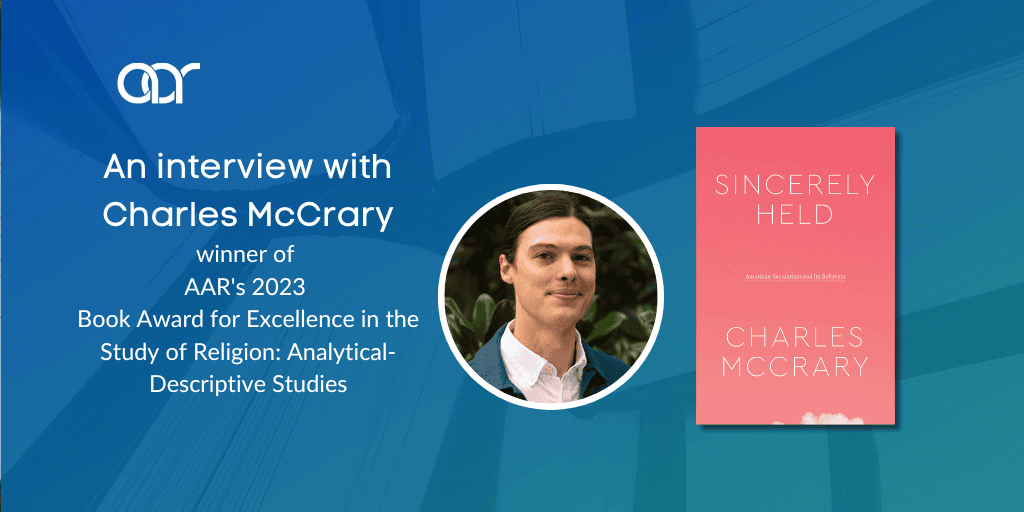
American Secularism and Its Believers with Charles McCrary
Charles McCrary, assistant professor of religious studies at Eckerd College and winner of the 2023 Book Award in Analytical-Descriptive Studies from the American Academy of Religion, discusses his book Sincerely Held: American Secularism and Its Believers.
RSN Podcast
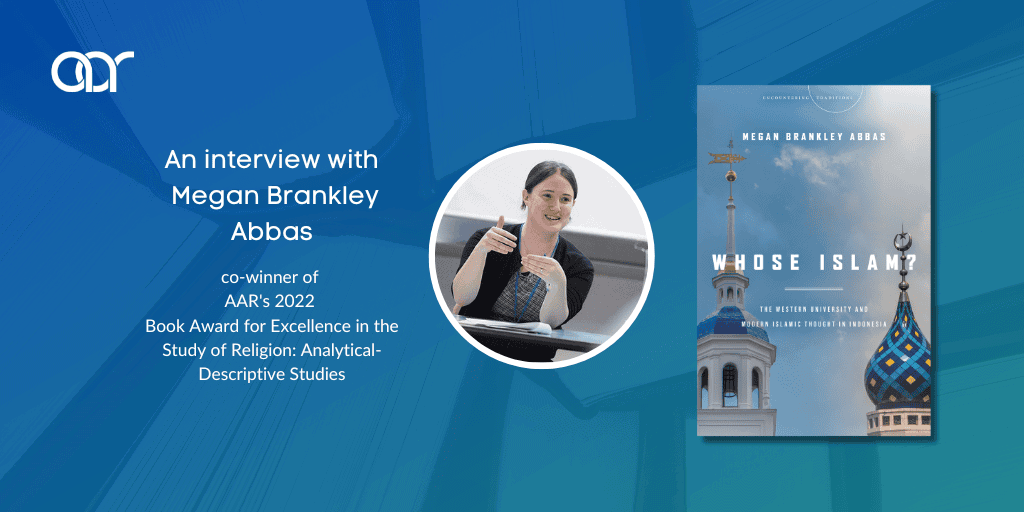
The Role of Western Universities in the Education of Scholars of Islam
Megan Brankley Abbas talks about her award-winning book Whose Islam?: The Western University and Modern Islamic Thought in Indonesia which discusses the question of authority in Islamic studies, both religious and academic.
RSN Podcast
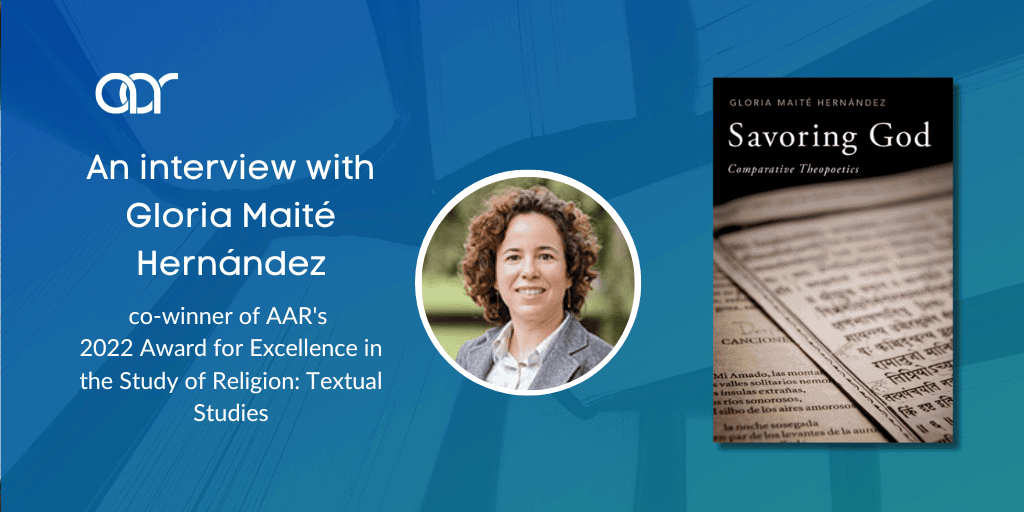
A Comparative Study of the Cántico Espiritual and the Rasa Lila with Gloria Maité Hernández
Gloria Maité Hernández, associate professor of languages at West Chester University and co-winner of the 2022 AAR Book Award in Textual Studies discusses her book Savoring God: Comparative Theopoetics.