
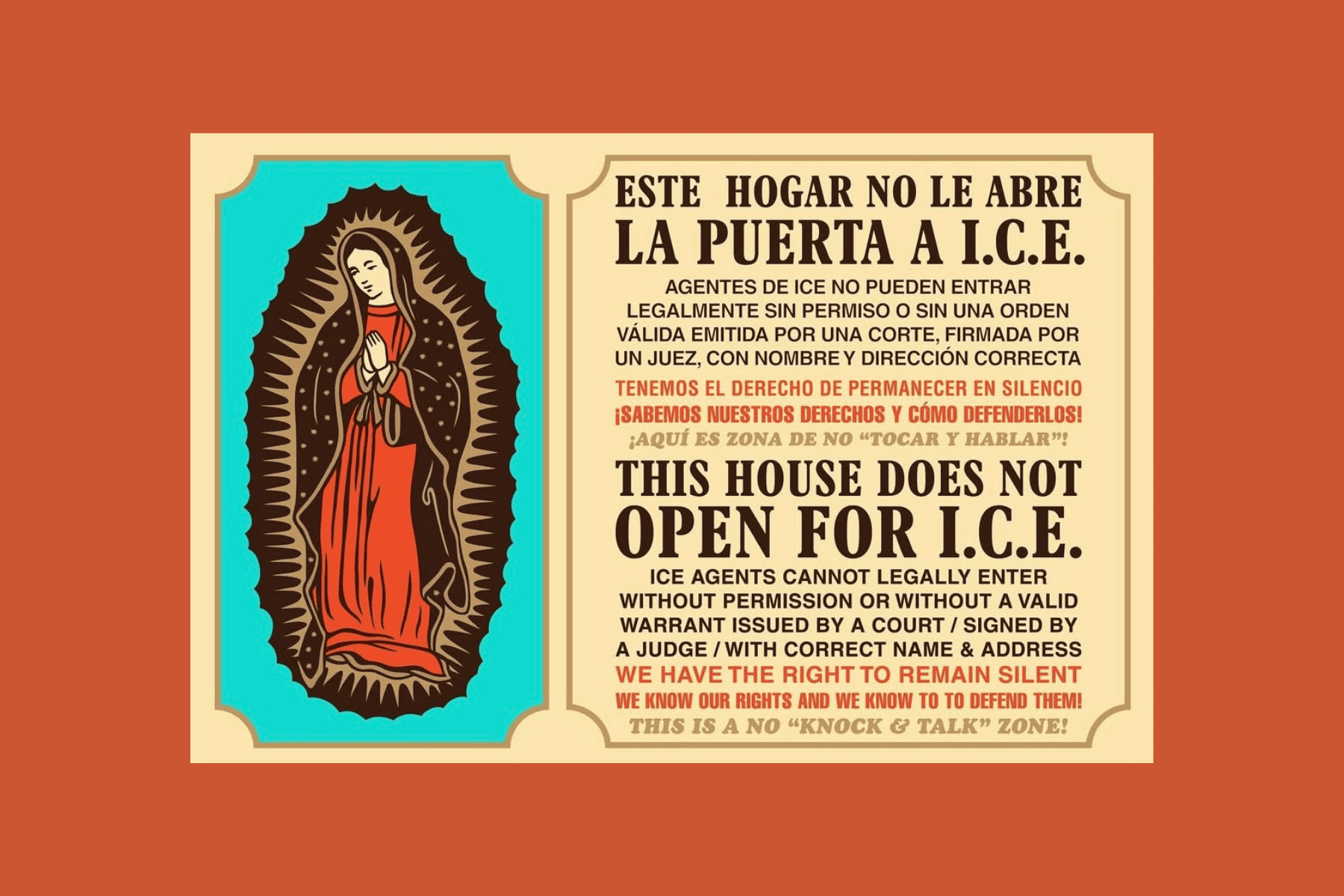
In cities and towns across the country, neighbors have been taking to the streets to protect community members from warrantless kidnappings and brutalization by agents of Immigration and Customs Enforcement (ICE), Customs and Border Patrol (CPB) and other masked, armed, and unaccountable enforcers from the Department of Homeland Security (DHS). This escalation of extralegal violence has not spared even houses of worship. The resistance has drawn on profound traditions of community protection against state violence, especially through the prophetic witness of immigrant-serving religious communities. Both as scholars of religion and as people of faith, we share in the grief and outrage caused by the escalation of ICE/CPB incursions on sacred grounds. Fortunately, there are concrete steps that scholars of religion and the institutions of which we are a part, including AAR and SBL, can take to protect the most vulnerable in our communities.
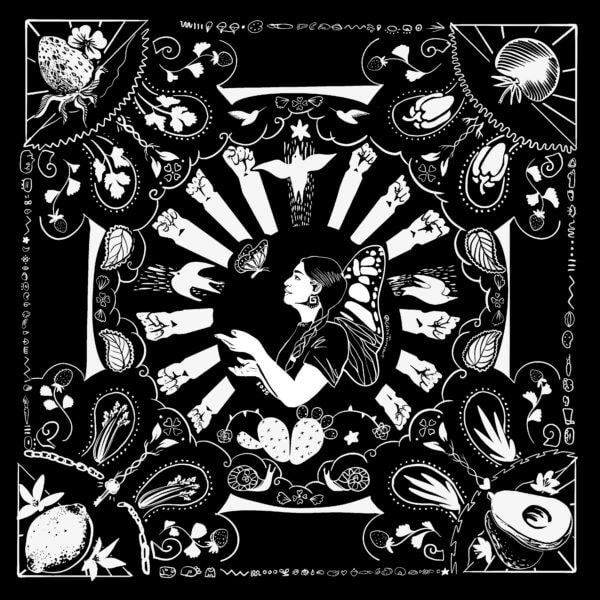
Art by Elisa Torres
Understanding the Crisis on Sacred Grounds
No law prohibits immigration enforcement agents from carrying out arrests at houses of worship, but historically, they have refrained from entering sacred grounds in pursuit of immigrants.When Trump rescinded the “sensitive locations memo” on his first day in office, religious leaders across the nation knew it was only a matter of time before arrests on religious properties would begin. And they weren’t wrong. The policy codified in that Obama-era memo and renewed under Biden protected areas such as houses of worship, sites of religious ceremonies, schools and universities, public demonstrations, and healthcare facilities from arrests, interviews, searches, or surveillance by immigration enforcement agents. Under the first Trump administration, scattered reports of immigration actions near schools and churches intimidated many families into seclusion, but DHS denied that any policy change would sweep away the protected class of sites.
In 2025 that line was breached with brazen cruelty.
Four lawsuits, collectively representing dozens of religious bodies across the United States, have been filed against the Department of Homeland Security since Trump rescinded the memo on January 20, 2025. These various suits describe how the rescission of the memo has already had a chilling effect on congregations, while arguing that directives targeting houses of worship violate both the First Amendment’s religion clauses and the Religious Freedom Restoration Act of 1993. In one of these cases (Philadelphia Yearly Meeting v. DHS), a district court judge has granted a preliminary injunction of relief to the plaintiffs. However, in another case (Mennonite Church v. DHS), a federal judge made the opposite ruling, effectively allowing ICE/CPB to enter churches.
But even before interfaith networks could turn to the law, ICE/CPB began conducting arrests at churches. Trump had not been back in office a full week when la migra came for Wilson Velásquez, a Honduran man with an active asylum case. During a Pentecostal church service on the outskirts of Atlanta, they summoned him from the sanctuary by beeping his ankle monitor. Upon stepping outside the church, he was immediately arrested and taken away. Coming within days of the policy change this case put immigrant pastors on notice, especially those serving Latino congregations.
The impact is being felt directly in the communities under militarized policing. In July, the Republican Congressional majority passed the administration’s budget, appropriating $170 billion over four years to build the largest detention and deportation machine in U.S. history. With a bigger budget than all U.S. local and state law enforcement agencies combined, this new initiative is largely outsourced to for-profit contractors. Numerical targets incentivize apprehensions of even those with legal status and no criminal history. By August, the ramped-up ICE and Border Patrol enforcement that began in Washington, D.C. had suppressed church attendance and discouraged immigrant congregants from accessing vital services their churches provide. In Los Angeles, armed masked men in plainclothes occupied the parking lot of Downey Christian Church with their SUVs. When the Reverend Tanya Lopez told them to leave church property, one agent pointed a gun at her and another shouted, “The whole country is our property.”
In Chicago, pastor Emma Lozano moved Spanish-language church services online. During the first Trump administration, her congregation was attacked by a vigilante after right-wing media influencer Glenn Beck named her church as “American communists in Chicago that are taking loads of money from George Soros” to smuggle Central Americans into the U.S. Now the violent attackers her church fears are out-of-control law enforcement agents.
In November those agents stormed the grounds of a Spanish-speaking church near Charlotte, North Carolina, as congregants raked leaves and cut the grass. A teenaged U.S. citizen fled into the woods to hide from the armed men. “We thought church was safe,” he told reporters later.
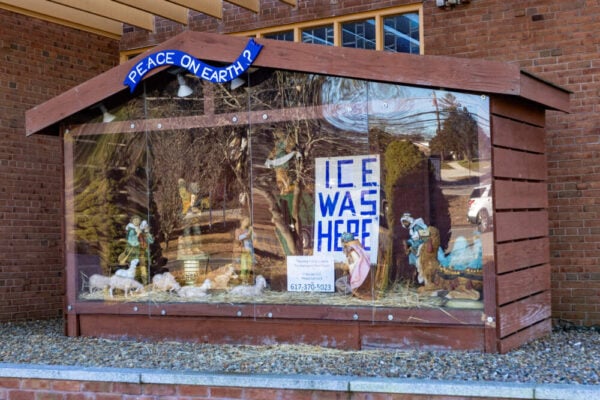
The Nativity scene at St. Susanna Parish in Dedham prominently displays a sign that reads “ICE WAS HERE.” (Jesse Costa/WBUR)
Emergency Response at AAR/SBL
As scholars and practitioners from across the world gathered at the American Academy of Religion Conference in Boston on the weekend before Thanksgiving, the Catholic Diocese of Charlotte declared a day of fasting, and the US Conference of Catholic Bishops issued its first “Special Message” in more than a dozen years to “oppose the indiscriminate mass deportation of people.” Rumors that ICE was planning to raid Spanish-speaking churches, mosques, and liberal synagogues in New England and Atlanta during the Thanksgiving and Christmas holidays circulated immediately before the conference. While DHS spokesmen denied any such plans and the rumors remain unconfirmed, scholars and practitioners alike remain concerned by the rescission of the sensitive locations memo, the increased immigration enforcement at and near houses of worship, as well as the arrests and physical assaults against faith leaders in clerical garb at protests.
On November 21, the first day of its conference, the American Academy of Religion (AAR) released a statement affirming “the dignity of all persons” and declaring the organization “in solidarity with civic, educational, and religious organizations that are protesting” detentions or arrests on sacred grounds. The statement, endorsed as well by the Society of Biblical Literature (SBL), signals the commitment of scholars and educators to defend against infringement of religious freedom.
The AAR leadership, in collaboration with scholars and practitioners of abolition, sanctuary, and immigrant rights, convened an emergency rapid response panel to field suggestions and ideas from members of the AAR and the local faith community. More than sixty AAR and SBL members showed up. Session organizers shared information about the Sanctuary Campus Network and members provided details on regional and state-level organizing to prepare for immigration raids in areas previously off-limits as sensitive locations. AAR leadership also agreed to create a dedicated space for Responding to ICE Enforcement on Sacred Grounds on the "Religious Studies Matters” section of the webpage to serve as a clearinghouse for gathering the list of the sources described during the meeting, as well as others as they emerge.
We Protect Us
If and when further incursions on sacred grounds come to pass, rapid response should be informed and intentional. For any of us who have been outraged about these injustices, these four questions from the abolitionist educator Mariame Kaba offer a helpful place to start:
- What resources exist so I can better educate myself?
- Who is already doing work around this injustice?
- Do I have the capacity to offer concrete support and help to them?
- How can I be constructive?
This article and its embedded links help us all with #1, and we are grateful for the work that AAR is doing to keep us all updated as this crisis continues to unfold.
For #2, we can all start by JOINING Sanctuary Campus Network. We can also research organizations that are active in our local areas, and SIGN UP with them. Local organizations are the best way to stay informed about ICE operations and the everyday risk to our own community members. The media has reflected this truth in technicolor. Every major act of street-based resistance has been intimately birthed from and tailored to the places being targeted for militarized operations –– from the inflatable frogs in Portland to citizen patrols in Los Angeles and organized early warning networks in North Carolina.
#3 asks us to reflect on our capacity— and also on our respective risk. Much of the media we take in works in an affective register to make us feel how people are being targeted and attacked. But if we’re not careful, the fear we feel on behalf of our beloved community members can become inaccurately personalized, even all-consuming. That is why reflection matters. Honestly assessing whether we are part of a group that is actively being targeted enables the relatively secure among us to maintain focus on those who are most vulnerable.
Answering #4 will require creativity, humility, and openness to learn. However, we imagined we might rise to meet the consolidation of fascism in our lifetimes, many of us have likely expressed disappointment in the actual work we have been able to do over the last year. In a recent blog post, Mariame offered helpful framing for why:
“Not everyone is rising to the occasion because the times you live in do not immediately shape who you are and what you do. The other truth, I believe, is that you rise to the level of your training and practice, not to the level of your imagined self.” Her antidote to despair is, as always, rooted in action: “I’ve been telling my loved ones that rather than trying to do a lot of things, focusing on one or two things is more realistic and sustainable.”
If you have a hard time imagining one or two things you could do, start here with this list of Some Actions That Are Not Protesting or Voting.
The team at Interrupting Criminalization has also put together a mini-toolkit called Block It!: Don't Build It, Don't Fill It, Don't Fuel It, which gathers tons of resources to support you in joining efforts already in motion in your communities and across the country.
Check in with organizations you joined in #2 for concrete actions they need. Maybe it’s donating, maybe it’s showing up at a grocery store to hand out flyers, maybe it’s talking with everyone on your block to see if they can join you in the one or two things you are doing.
If your neighbors are not already connected, another place to start is this 8-Step Guide for Mapping Community Defense and Care, created specifically for this moment ahead of ICE actions in Chicago.
The point is that there is always something to do. And every step we take together shows us all that we can, in deed, protect us.
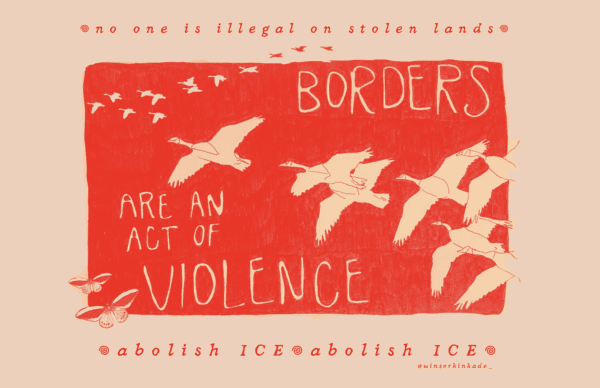
Art via Winsor Kinkade @winsorkinkade_
News Source

Author(s)
Laura McTighe
Author of "Fire Dreams"
Lloyd D. Barba
Host of the podcast "Sanctuary: On the Border Between Church and State"
Jennifer Scheper Hughes
Author of "Church of the Dead"
Bethany E. Moreton
Author of "Entre dios y el capital"
Pamela Voekel
Author of "For God and Liberty"