
Religious Studies News communicates important events of the field and examines critical issues in education, pedagogy, research, publishing, and the public understanding of religion. Sometimes that involves sharing what others are writing about the field and these issues.
In Open Tabs, RSN editors will share the articles they’ve been reading and thinking about. If you have recommendations for articles, podcasts, or other media you’ve recently encountered that examine issues that fall under the purview of RSN, email us.
What We’re Reading
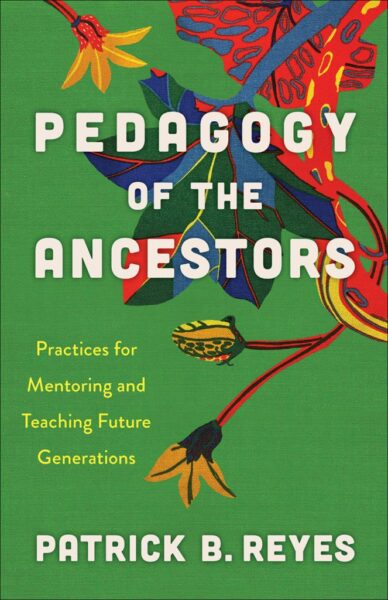 Patrick Reyes publishes Pedagogy of the Ancestors: Practices for Mentoring and Teaching Future Generations
(Westminster John Knox Press, 2026)
From the publisher:
“Drawing on Indigenous wisdom, spiritual traditions, and Reyes’s experience as a scholar and pastor, Pedagogy of the Ancestors reframes education and mentorship as relational, future-oriented work. It emphasizes forming character, cultivating joy, and creating spaces where young people can flourish. Whether working with children, teenagers, or young adults, readers are encouraged to live on ancestor time, considering how their choices ripple across generations. Ultimately, the book challenges us to live at the speed of love, honor our ancestors by becoming cycle breakers, and sow seeds of healing for a flourishing future.”
“Farmer‑poet Wendell Berry’s environmental ethics were deeply rooted in his Christian faith and belief in caring for creation”
Published September 4, 2026 in The Conversation
Kristy Nabhan-Warren
Excerpt:
“Throughout his life, Berry, who died on Aug. 31, 2026, was a leading advocate of environmental stewardship. You might recognize his belief system in what’s known as creation care today.
It embraces a responsibility to care for the Earth and all its creatures. Berry increasingly saw that ethic violated by the industrialization of agriculture and ignored by a dominionist theology, preached by some prominent American Christians, which holds that humans have a God-given right to exploit the Earth’s resources.”
“Mosques have more than doubled since 9/11. But Muslims say opposition is fierce.”
Published September 9, 2025 in Religion News Service
Ulaa Kuziez and Bob Smietana
Excerpt:
“According to RNS’s reporting, as well as other news reports, at least eight mosque expansion projects have faced anti-Muslim opposition over the past year, including large-scale resistance at public hearings and litigation.
Those projects include three mosques in Texas, and one each in New Mexico, North Carolina, New Jersey, Pennsylvania and Oklahoma.
“We still get linked to 9/11. We still get linked to terrorism, and it continues on,” Khan said. “That’s my regret: Twenty-five years after 9/11, we still haven’t learned anything.”
“More universities added Muslim chaplains post 9/11. Then came 10/7.”
Published September 11, 2026 in Religion News Service
Yonat Shimron
Excerpt:
“Shortly after the Sept. 11, 2001, attacks, universities across the country began to reckon with Muslim students in their midst, and within a decade, dozens, including Rutgers and all eight Ivy League Schools, added full-time Muslim chaplains to care for Muslim students. There are now 80 full time Muslim chaplains on college campuses across the country, and some have designated spaces for Muslim prayers and programs, according to the Association of Muslim Chaplains. It’s a big change from 25 years ago when only a few colleges had Muslim chaplains, and nearly all of them were volunteer part-time posts, the association said.
But that growth has collided with a more hostile moment for American Muslim students amid an increase in anti-Muslim political rhetoric, and in the wake of Israel’s war on Gaza, which has become a lightning rod in American politics and on college campuses.”
“Is Trump’s Adoption of 19th Century Purity to Combat Teen Pregnancy Just a Cynical Nod to the Base?”
Published September 15, 2026 in Religion Dispatches
Emma Cieslik and Sara J. Moslener
Excerpt:
“While purity theology, i.e. calling comprehensive sex education materials pornographic, is part of the Trump administration’s goal, another element is pronatalism. As some critics have argued, the elimination of vital teen pregnancy programs will promote teen pregnancies. If defunding sex education programs is not enough, the Trump administration has also steered millions of dollars toward programs that will almost certainly produce a sharp increase in teen pregnancy. The unique feature of the Trump plan is to fund programs that teach teenage girls fertility tracking, or what religious conservatives call Natural Family Planning.”
News Source