

Please join us in celebrating our members on their professional news and accomplishments!
As a reminder, AAR publishes member accomplishments including new publications, award announcements, and media mentions. Share your wins with us!
Awards and Accomplishments
Brooke Schedneck Receives Grant from John Templeton Foundation
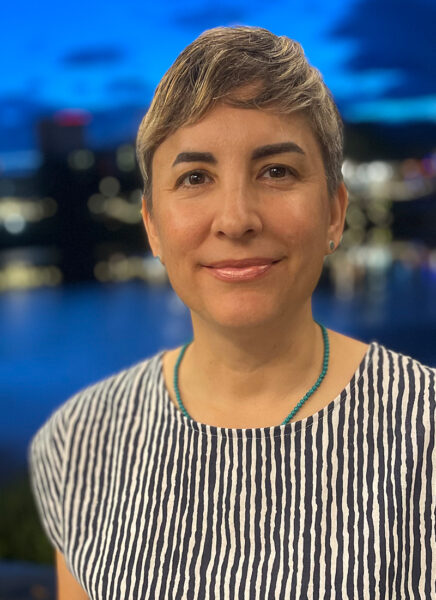 Brooke Schedneck — associate professor, W. J. Millard Professor of Religious Studies, and Chair of Asian and Asian American Studies at Rhodes College — has received an over one million dollar grant from the John Templeton Foundation for the project titled, “Spiritual Transformations: Reimagining the Sacred in a Digital Age,” on which she is co-Principal Investigator.
Books and Publications
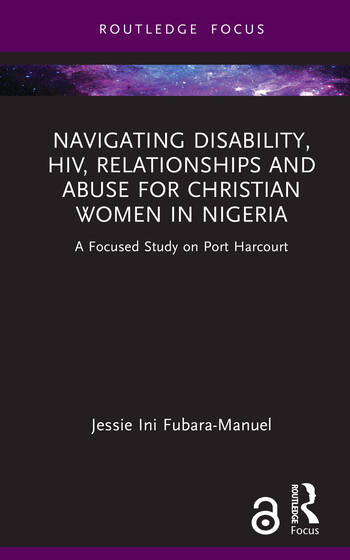 Jessie Ini Fubara-Manuel
Navigating Disability, HIV, Relationships and Abuse for Christian Women in Nigeria:
A Focused Study on Port Harcourt
Navigating Disability, HIV, Relationships and Abuse for Christian Women in Nigeria contains poignant stories of formidable women who, because of their gender and disabilities, were sexually assaulted and infected with HIV by people known to and loved by them. Focusing on the Christian women of Port Harcourt, Nigeria, the book brings together the often under-represented voices of women with disabilities and HIV in an under-researched area of Nigeria.
Fubara-Manuel builds on long-term ethnographic research to bring together the isolated cases of disability, HIV, gender-based violence and Christianity in sub-Saharan Africa. In so doing, she critically examines the perpetuation of rape culture and the role of faith communities and support groups in shaping women’s responses. The author’s work moves beyond victimhood frameworks to document the agency of women living with both disability and HIV, and their resilience and faith-based solidarities as resources for survival, resistance, and liberation from abuse.
The book advocates a conversation between men and women for the dismantling of patriarchal structures that promote and legitimise the rape culture perpetrated against women by men. By integrating lived theology, gender analysis, and disability studies, this book advances existing literature through relational and narrative-driven accounts that re-centre marginalised voices and rethink the role of Christian faith in contexts of sexual violence.
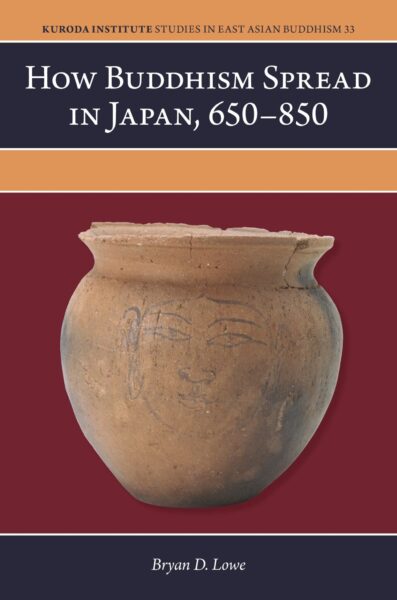 Bryan D. Lowe
How Buddhism Spread in Japan, 650–850
Between the late seventh and early ninth centuries, Japan changed from a land largely without Buddhism to a country where Buddhist ideas, images, and practices were everywhere. The introduction of Buddhism transformed the social and intellectual life of the provinces. Regions that once lacked temples suddenly had so many that virtually every village had a place of worship nearby. People began to understand their world in new ways, imagining previously inconceivable possibilities for themselves in this life and the next. This was arguably the most dramatic religious transformation in the history of Japan.
How Buddhism Spread in Japan is the first book to tell the story of this religious revolution in the Japanese provinces. Bryan D. Lowe, a leading expert on Japanese religions, argues against the standard view that Buddhism first reached ordinary people in the provinces in the twelfth and thirteenth centuries. This bold study offers a new narrative for the history of Japanese religions, one that dates Buddhism’s spread centuries earlier than standard accounts. Lowe highlights the agency of provincial patrons, mobile monks, female preachers, and rural villagers, who worked together to bring Buddhism to the Japanese countryside.
How Buddhism Spread in Japan also introduces new methods for reading archaeological and textual materials in tandem. Drawing upon an archive of hundreds of thousands of pieces of inscribed pottery, roof tiles, and wooden slips, it uses material culture to uncover the religious lives of villagers on the geographic and social margins of Japan. Lowe reads this corpus alongside Buddhist tales and previously untranslated preaching notes to reconstruct the worldview and practices of provincial villagers. He combines archaeological and preaching materials to access this otherwise invisible world. Written in accessible and engaging prose, How Buddhism Spread in Japan undermines long-cherished narratives in the field of Japanese Buddhism and makes a methodological intervention of interest to scholars of classical and medieval studies more broadly.
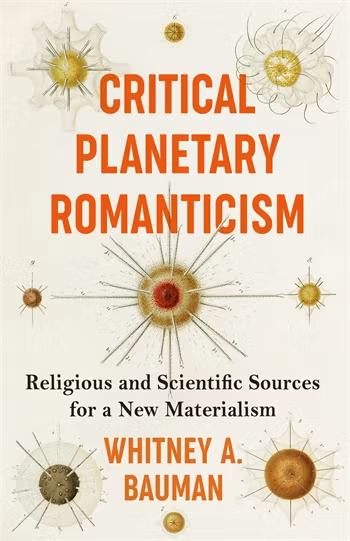 Whitney A. Bauman
Critical Planetary Romanticism: Religious and Scientific Sources for a New Materialism
Facing planetary environmental crises, philosophers and theorists have critiqued the human exceptionalism of dominant forms of science. Yet today is not the first moment in which technological and political change have spurred efforts to rethink humanity’s place in the world. This book turns to the nineteenth-century German Romantic tradition to find resources for a new approach—critical planetary romanticism—that foregrounds the irreducible entanglement of all living and nonliving things.
Whitney A. Bauman argues that German Romantic figures such as Ernst Haeckel represent a vital alternative path for critical thought that strikingly anticipates contemporary new materialisms. Their thinking about evolution and ecology did not separate humans from the rest of the natural world but instead foregrounded an immanent understanding of the world from a position within it. Bauman traces the theological and religious influences on Romantic ecology, revealing how Christian as well as Indic and Islamic thought shaped scientific understandings of nature. Considering the history of scientific racism associated with Haeckel, he shows that critical planetary romanticism addresses the various embodied experiences of humanity and how they are shaped by power relations. At the same time, he challenges postmodern and critical theories to engage with the nonhuman world and the entirety of the planetary community. A bold intervention into environmental philosophy, Critical Planetary Romanticism reconceives new materialism and in so doing lays the groundwork for a new planetary politics.
In the News/Public Scholarship
 Kin Cheung Launches “Between Qi and Science: My Experience of What Can’t Be Measured,” an Audio Memoir with Axis Mundi Podcast Network
Between Qi and Science: My Experience of What Can’t Be Measured is a six-episode audio memoir about qi, Chinese medicine, and the limits of Western biomedicine. It follows a Cantonese immigrant sweatshop worker who became a self-taught community healer in Brooklyn’s Coney Island. His son, Dr. Kin Cheung, a scholar of religion and Buddhism, takes us on the journey of living with and learning from his father.
The story starts with a teenage encounter with qigong (hei gong). From there it traces the sweatshop labor, poverty, and immigration that shaped a “wounded healer.” Later episodes dig into acupuncture, placebo research, and the politics of “traditional medicine.” Other episodes cover Asian American masculinity and stereotypes, and the challenge of holding mainstream medicine, Chinese healing practices, and Buddhism as equally real.
The series blends personal narrative, oral history, and religious studies scholarship. It’s for listeners interested in alternative medicine, Asian American stories, religion and science, and healing and grief across generations.