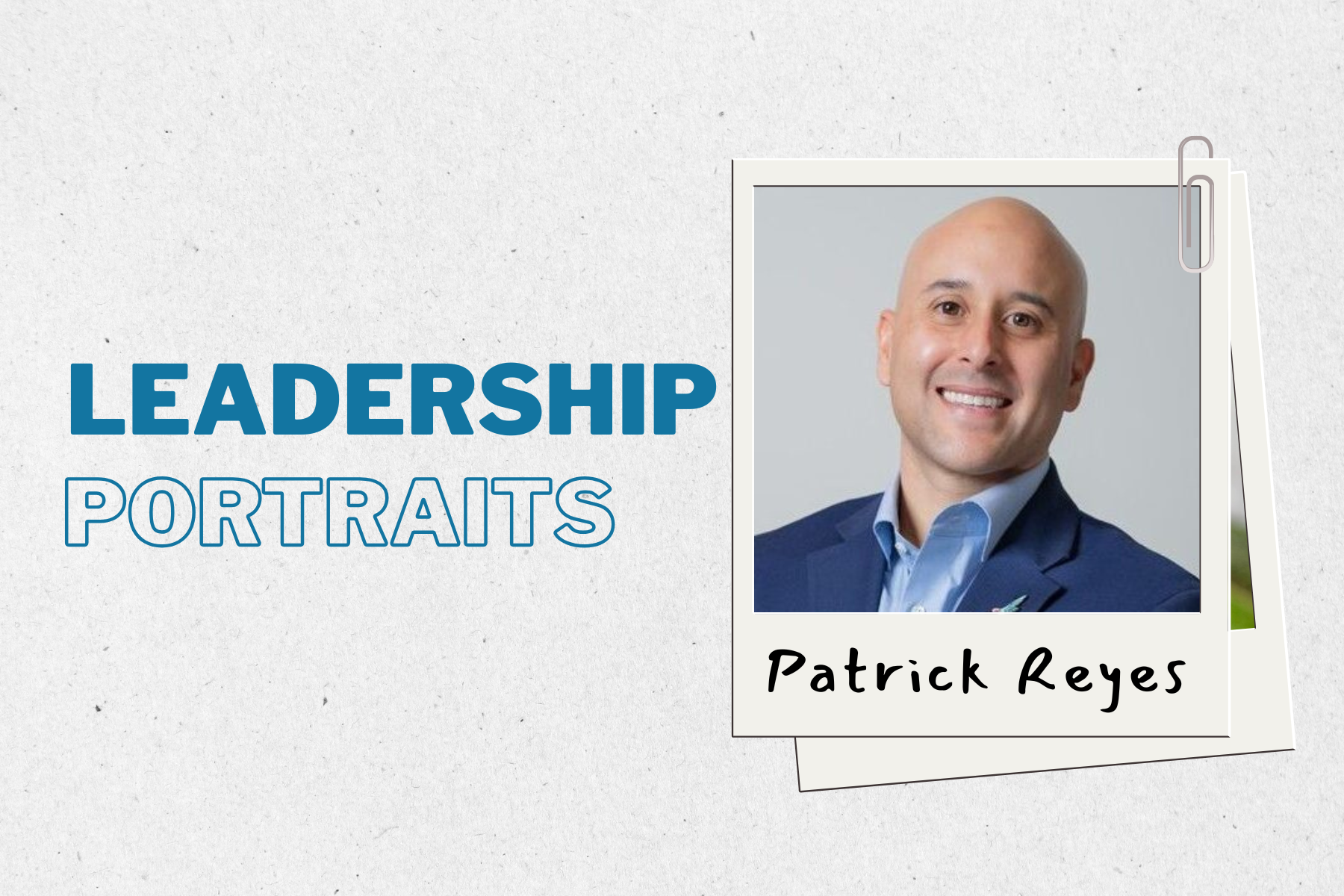
Don’t Leave it to the Muppets
Patrick B. Reyes — who serves as contingent faculty director on the AAR Board of Directors — reflects on academic labor, governance, and the future of the field
I remember the 1989 earthquake. I grew up in Northern California, not far from the epicenter, and I remember the ground moving in a way that made one thing instantly, undeniably clear: I had no control. I remember running out of our townhome as glass shattered around us. The earth moved and there was nothing any of us could do about it.
What is happening to the academy right now is nothing like that.
This is not a natural disaster. Nobody should be standing around waiting for the shaking to stop. Departments of religion are closing because people are choosing to close them. Federal funding for humanities research is being stripped because people are choosing to strip it. The philanthropic ecosystem that has long supported serious inquiry into meaning, ethics, and human flourishing is retreating because people are choosing to retreat. We keep training extraordinary scholars, rigorous, multilingual, theologically formed, humanistically grounded researchers, only to watch them land in a contingent labor market that was never designed to hold them.
These are policy choices. Made by people. Those people are muppets. And I am not leaving religious work to them.
Which means the right people need to be paying attention, refusing to look away, and also, realize that this moment does not call for some prophetic stand for higher ground – I mean higher education.
I serve on the American Academy of Religion Board of Directors as a representative of academic labor. What the role requires right now is for us all to become futurists.
Not a pessimist cataloging losses. Not auctioneers for closed libraries and faculty offices. Not an optimist pretending everything is fine. Or worse: behaving like tech billionaires that build fortresses and bunkers to survive the moment.
We need futurists. Scholars who refuse to let the worst version of the future arrive and name possible futures we could be living into. In my own work, across books and stages and too many early morning writing sessions, I have argued that good governance is not crisis management. It is future-readiness. It is asking before the emergency hits: who will carry this work forward, under what conditions, and through what doors?
So here is the question I keep bringing to the table. Where is the work of religion already happening and who is best equipped to do it? The answer, it turns out, is broader than our current membership.
These scholars are not waiting for the academy to catch up. They are out there right now, animating narratives, shaping policy, building organizations, holding grief, brokering peace, and writing the stories that will form the next generation. These are not consolation prizes. These are not side quests or plan B’s. This is the primary field of play, and it is bigger and more alive than our job descriptions have given us credit for.
Consider the range:
Seminary and faith community leadership. Nonprofit executive leadership and program design. Independent researchers. If you read those and are convinced you know the rest of the list, stay with me. Foundation program officers and philanthropic strategy. Hospital and hospice chaplaincy. Military and veterans’ chaplains, educators, and caregivers. Prison and reentry program administrators. K-12 curriculum design and education policy. Add in faith-based k-12 system, and you have, just in Catholic systems, 127,000 teachers working with more than one million students. We have museum curators and public historians. Publishing, editing, and religious literacy media. Podcasting and audio storytelling. Animation and narrative media production. Documentary filmmaking and broadcast journalism. Speechwriting and narrative strategy for social movements. Coaching and consulting for purpose-driven leaders. DEI, equity, and belonging work in corporations and institutions. Interfaith dialogue and peacebuilding, domestically and internationally. Government and policy staff roles at the intersection of religion and public life. Community organizing and congregational development. Mental health counseling and pastoral care. Immigration and refugee services. Global development and humanitarian response. Academic advising, student affairs, and higher education administration. Writing, novels, essays, poetry, creative nonfiction, memoir.
That is not a fallback plan. That is the field. Alive, expanding, and already in motion.
And yet, somehow, we keep organizing our governance, our structures, and our flagship annual gathering almost entirely around one figure: the tenure-track faculty member with a departmental home, a paper to present, and a sabbatical on the calendar. That describes fewer and fewer of our members every single year. Centering everything around that one role is the equivalent of San Francisco saying, “we are just going to hope another earthquake doesn’t hit again.” At this point, it is a bad policy choice.
We have people in our membership making films, running hospitals, writing legislation, counseling the grieving, animating stories that millions of people watch, and building the civic and spiritual infrastructure of communities across this country. Imagine a gathering that actually let you see that work in motion. Imagine how good that would be. It is not just more honest about who we are, but genuinely, surprisingly entertaining.
My work on this board is to push us toward governance that sees the full scope of what our scholars are already doing, fights for the conditions that make that work sustainable and dignified and refuses to define academic labor so narrowly that most of our members vanish from the count.
The future of this field is not coming. It is here. Our job is to have the imagination to see it and the courage to govern like we mean it.
Leadership Portraits is a monthly Religious Studies News (RSN) series that introduces readers to some of the leaders within the American Academy of Religion.
Patrick B. Reyes, Ph.D., serves on the American Academy of Religion Board of Directors and is President of Auburn Theological Seminary.
News Source