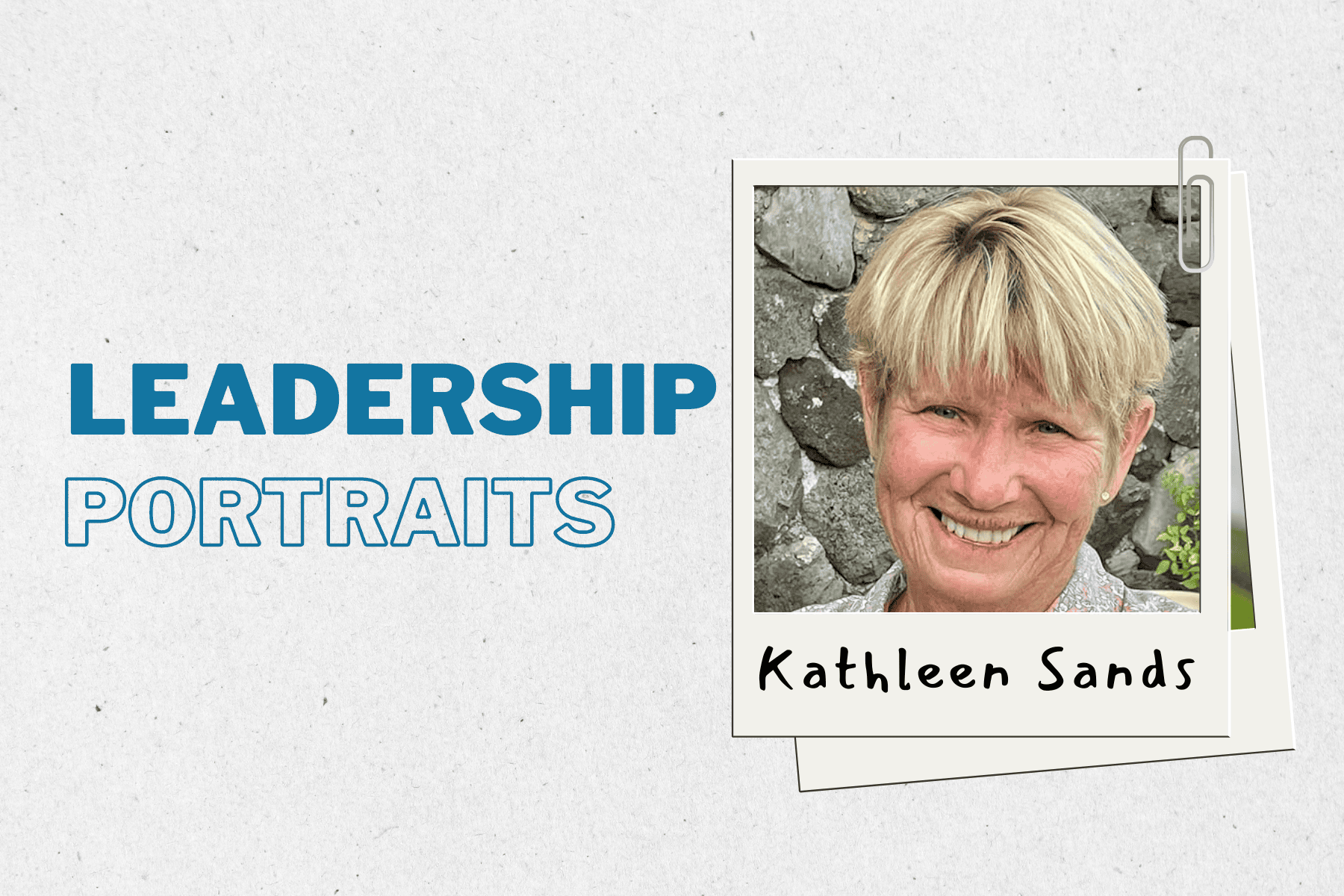
Kathleen Sands is a professor of American Studies at the University of Hawaiʻi Mānoa, where she studies and teaches about religion in American public life. She is the author of Escape from Paradise: Evil and Tragedy in Feminist Theology and America’s Religious Wars: The Embattled Heart of Our Public Life. Her next book, which will be published by University of Virginia Press, is called Thinking Twice About Religious Freedom. It questions the excessive power of religious liberty claims in American law, proposing that issues now framed in terms of religious liberty be reconsidered as matters of social ethics.
What is your position on the AAR Board of Directors? What exactly do you do in your role?
I serve as Secretary to the Board. I participate in the AAR’s Executive Committee which meets year-round. I also sit on the Board of Directors, which has two extended meetings each year. My role is to listen closely and keep track of our decisions.
What do you think AAR members would find surprising about your work on the Board of Directors?
This is my second stint on the Board; the first was 30 years ago. Serving on the Board has allowed me to see the AAR from the inside – an amazing, multifunctional organism, which moves along only through the volunteer efforts of literally hundreds of members. It’s like 400 people inside a giant caterpillar suit. When you go to the conference, you may only see the caterpillar. But believe me, there is a crowd in there. And because the AAR works almost entirely through its members, it generates a continuous web of relationships that can last over a whole career, which has been exactly my experience.
Can you briefly tell us about your work apart from the AAR?
My current book is about religious freedom. It shows how constitutional law around religious freedom has become absurd and unjust. The basic problem is that the law is based on the premise that religion is good. The premise is incorrect, because religions disagree about what is good and what society should look like. They disagree with each other, with non-religious people, and even within their own tradition, and these disagreements have become even greater over time. I have chosen three areas of conflict that are often framed in terms of religion – vaccination rules, abortion, and how kids learn about sexuality in public schools. In each case, I will show how the religious freedom frame obscures the ethical stakes of the issue. Then I reframe the issues in terms of the people, interests, and principles that are at stake. Those principles, I suggest, should include not only the Constitutional values of freedom, equality, limited government but also the broader ethical principles of dignity, fair distribution of resources, and commitment to the common good.
How do you explain to others that “religious studies matters”?
Most people in the world are involved with religion, so studying about religions is part of understanding the world. But it’s also very intimate, because human beings can’t help doing “religion,” even if we don’t notice it or call it that. Ritual, for example, is something people naturally do. It’s the same with stories about our origins and destiny. People need to hear these and pass them on. Seeking peace, meaning, connection, ecstasy – humans are going to do these things, and they’re the stuff of what we usually call religion. By studying religions, we get closer to the world and, at the same time, closer to our own selves.
What is the best book you read or movie you watched this past year?
Best book – Trust by Hernan Diaz and How To Be Both by Ali Smith.
Best movie – Hamnet (this could also go under best book by Maggie O’Farrell)
Tell us something about yourself that people might find surprising.
I was in Boston in 1992 when news broke about James Porter, the pedophile priest. I’d been researching priestly misconduct, so the Boston Globe and other media interviewed me. At the time, though, many people in Boston wanted to believe (or pretend) that the Porter case was an anomaly. After his story faded, it took another 10 years for the Boston Globe to investigate the scope of priestly abuse. The 2015 film Spotlight told the story of that 2002 investigation and the tremendous resistance it had to overcome. Strangely, until I saw that film, I had almost forgotten how I and others had tried to bring it all to light in 1992. It was such a lesson in the effort it takes to remember painful things, especially when those in power want to forget.
Leadership Portraits is a monthly Religious Studies News (RSN) series that introduces readers get to some of the leaders within the American Academy of Religion.
News Source