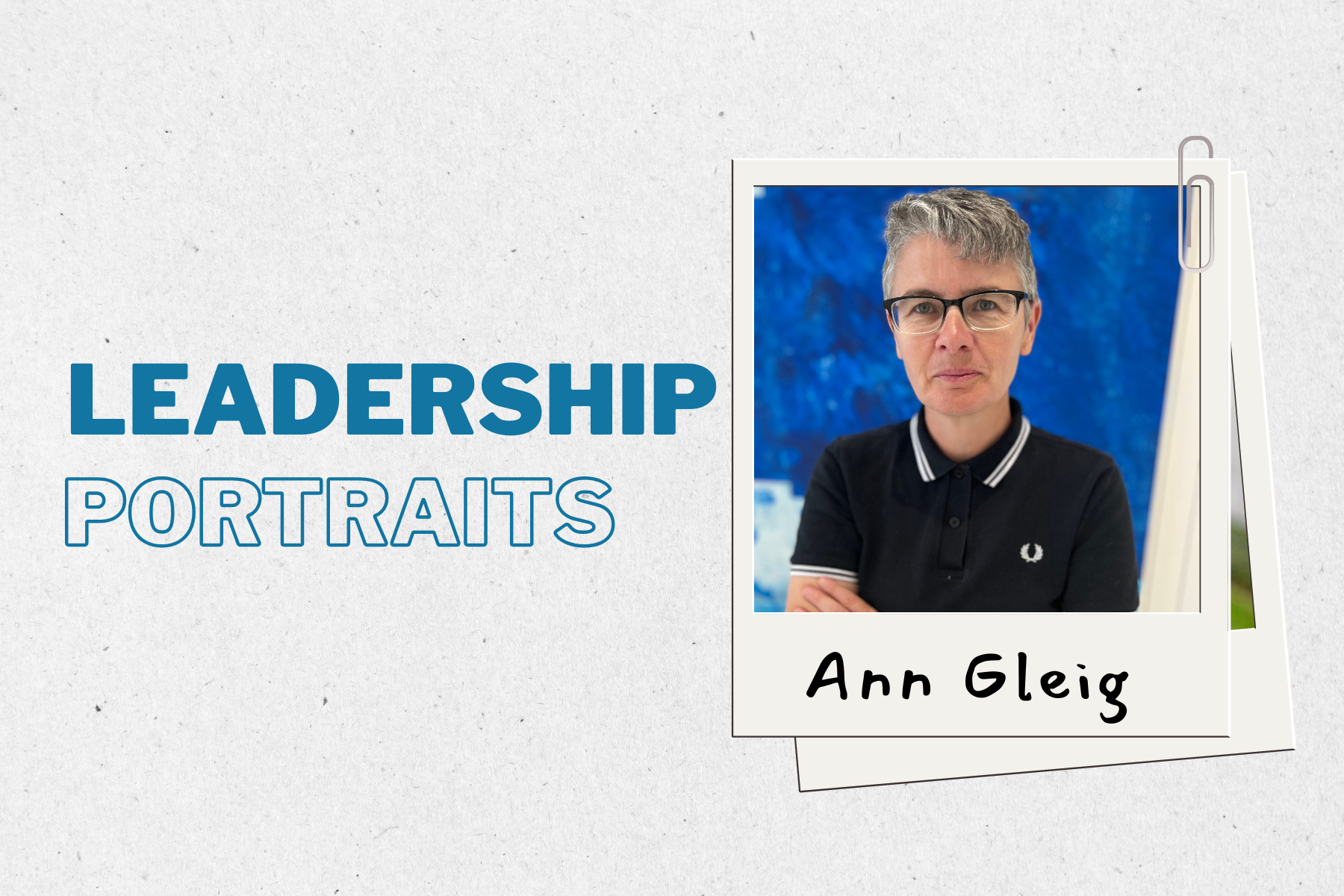
Ann Gleig is a professor of Religion and Cultural Studies at the University of Central Florida. Her research areas include Buddhism in America and New Religious Movements and her publications include American Dharma: Buddhism Beyond Modernity (Yale University Press, 2019) and The Oxford Handbook of American Buddhism, co-edited with Scott Mitchell (Oxford University Press, 2024). Her new book, Talking About Cults: Abuse and the Study of New Religious Movements, will be published in November by The University of Georgia Press, and she has co-written a book on sexual abuse in Buddhism with Amy Langenberg, forthcoming with Yale University Press.
What is your position on the AAR Board of Directors? What exactly do you do in your role?
I am the Program Unit Director, so my role is essentially to communicate the decisions that have been made and the work that has been done by the Program Committee to the Board, which oversees all AAR Program Units and Seminars. At our board meetings, I present a Program Committee report that includes updates on AAR Program Units and Seminars such as how we are tackling the “proliferation problem.” My role as a board member is also to listen to and discuss proposals by other members of the Board. All board members vote on major decisions involving the AAR.
What do you think AAR members would find surprising about your work on the Board of Directors?
Like me they might be surprised to discover that all the roles on the board apart from the Executive Director are service positions that are not financially compensated. Colleagues have been surprised to discover that I — and other Board members — only get one free night accommodation at the November conference. I mention this because before I began my service work with the Program Committee and the Board, I think I reified the AAR as a kind of elite institution and saw AAR leadership as being distinct and separate from its “regular” members. In fact, the AAR is mostly run by its members and while it’s really important for those in leadership positions to listen and respond to concerns and critiques from its members, I think it’s also important for us all to have a sense of collective responsibility and ownership of the AAR as a member organization. Given the ideological assault on higher education and all of the threats facing religious studies departments, we need this sense of togetherness and solidarity more than ever.
What is the best book you read or movie you watched this past year?
The best movie I saw was Sirât, which really unsettled me and stayed with me for weeks after. I won’t say too much about it because there is actually a screening and a moderated discussion on it at the November conference so I would encourage members to attend and then come and talk with me about it, please!
How do you explain to others that “religious studies matters”?
Well, it depends on who the other is. If it was a pre-med student at UCF, for example, I would emphasize how religious literacy can help them become more culturally attuned and empathetic doctors and help them understand, for example, why there is growing public distrust in vaccines. When we’ve worked with survivors of sexual abuse in Buddhist contexts, Amy Langenberg and myself have shared how studying Buddhism historically can provide resources to support survivor-justice. Explaining how the study of religion relates to and illuminates more about a person’s particular interest or specific situation is how I generally respond to the question of why religious studies matters. And because religion is at the core of so much of human experience — identity, community, culture, ontology — it’s not hard to do.
Tell us something about yourself that people might find surprising.
I once sneaked out of a three-month Buddhist retreat in Nepal to check the score of a very important European football cup match at the nearest Internet café. That is because Liverpool Football (LFC) club is my true religion. LFC’s motto is “You’ll Never Walk Alone,” which is a good message for me to end on here.
Leadership Portraits is a monthly Religious Studies News (RSN) series that introduces readers get to some of the leaders within the American Academy of Religion.
News Source