

Please join us in celebrating our members on their professional news and accomplishments!
As a reminder, AAR publishes member accomplishments including new publications, award announcements, and media mentions. Share your wins with us!
Awards and Accomplishments
Darcie Price-Wallace and Darig Thokmay Awarded Early Career Research Fellowships from the Robert H. N. Ho Family Foundation Program in Buddhist Studies (ACLS)
 Darcie Price-Wallace, Northwestern University
Tibetan Nuns: Inspiring Practitioners
 Darig Thokmay
An Annotated Critical Translation of The Biography of the First Jamyang Shépa: Monastic Reform, Ideological Struggle, and Religious Networks
Uudam Baoagudamu, Pronoy Chakraborty, and Julia Hirsch Awarded Dissertation Fellowships from the Robert H. N. Ho Family Foundation Program in Buddhist Studies (ACLS)
 Uudam Baoagudamu, University of California, Santa Barbara
Overlapping Mandates: Buddhism, Empire, and Local Agency in Eighteenth-Century Inner Mongolia
 Pronoy Chakraborty, University of California, Berkeley
Mystic Power and Riverine Networks: Visualizations of Channels, Winds, and Sexual Fluids in the Carya Songs attributed to the Tantric Buddhist Mahasiddhas
 Julia Hirsch, Stanford University
In the Wake of Rupture: Creating Sacred Body Relics in the Tibetan Buddhist Diaspora
Books and Publications
Pierre Hurteau
Religion, Gender Identity and Trans Identity
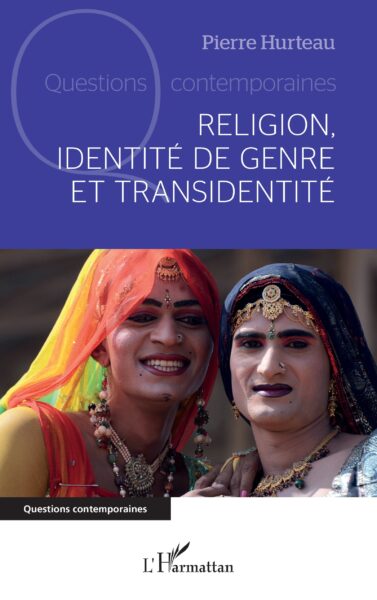
Over the past few decades, the issue of trans identity—defined as a gender identity different from the sex assigned at birth—has become a central topic of public debate. Organizations advocate for the rights of transgender and non-binary people, while some conservative groups express reservations about expanding these rights. The concepts of gender identity and non-binary identity are the subject of much discussion, sometimes influenced by religious discourses that assert a strict relationship between male, female, and biological determinism.
This essay examines how various religious traditions address trans identity. Abrahamic religions, such as Christianity, Judaism, and Islam, generally tend to adopt a binary view of gender, although historical exceptions exist. In contrast, some traditions, such as Hinduism and Buddhism, sometimes acknowledge the existence of a third gender. However, their current approach is influenced in part by the impact of colonialism and other social conceptions of gender. History suggests a liberating potential since all the traditions studied have, in ancient times, embraced, to varying degrees, the idea that sex and gender are not limited to two opposing categories, masculine and feminine.
Amir Hussain
The Oxford Encyclopedia of Islam in North America
 North America’s relative openness to immigration and religious expression, as well as its unusually high rate of religiosity (especially in the United States) within the developed world, has allowed Islam to take root, thrive, and evolve in surprising ways. Islam is already the second largest religious tradition (behind Christianity) in Canada, and is projected by the Pew Research Forum to be the second largest religious tradition in the United States by 2040. Almost daily, one reads about news relating to Islam and Muslims, and many universities offer courses on the topic. While there is a growing body of scholarship, there are few resources focusing on Islam as a North American religious tradition, and none which consider the connections between Muslims across the region.
The Oxford Encyclopedia of Islam in North America provides the leading reference resource in this growing field, assembling scholars from religious studies, theology, history, gender and sexuality studies, political science, sociology, law, media studies, and the arts. With over 90 articles, the volume covers the major issues related to Islam in the West, including religious practice and communities, immigration, modernism, demographics, artistic expression, politics, and culture. Given their unique and varied interpretations of the religion, African American, Latin American, and Caribbean versions of Islam are also covered in detail, further demonstrating the ongoing evolution of a unique and varied North American Islam, part of a rapidly changing global religious landscape.
Includes a chapter by AAR member Kathleen M. Moore
Samira K. Mehta
God Bless the Pill: The Surprising History of Contraception and Sexuality in American Religion
 Most people today understand contraception as central to women’s liberation, and when the birth control pill arrived in 1960, the media thought it would usher in a sexual revolution. But a surprising number of religious Americans in the mid-twentieth century also saw contraception as part of God’s plan—a tool to create happy, prosperous American families in the post–World War II era.In God Bless the Pill, Samira K. Mehta traces the remarkable story of how mid-twentieth-century Catholic, Protestant, and Jewish voices promoted the use of birth control and made it more accessible for many Americans. They hoped birth control methods would curb divorce rates by encouraging sexually dynamic marriages and families unstrained by “too many” children—thereby creating a postwar upwardly mobile middle class. Religious leaders also promoted this understanding of the family as tied to Cold War capitalism and encouraged neither racial nor gender equity.But then came the backlash, both from the Right—which failed to anticipate the feminist potential of contraception—and from the Left, where women, particularly women of color, sought to ensure that birth control was a tool of liberation rather than one rooted in patriarchal and racial oppression. Ultimately, Mehta offers compelling new insights into the way religion accommodates itself to social, technological, and medical change.