Hispanic Heritage Month Reading List
Some Suggested Titles from AAR's Reading Religion
Reading Religion is an openly accessible book review website published by the American Academy of Religion. The site provides up-to-date coverage of scholarly publishing in religious studies, reviewed by scholars with special interest and/or expertise in the relevant subfields. Reviews aim to be concise, comprehensive, and timely.
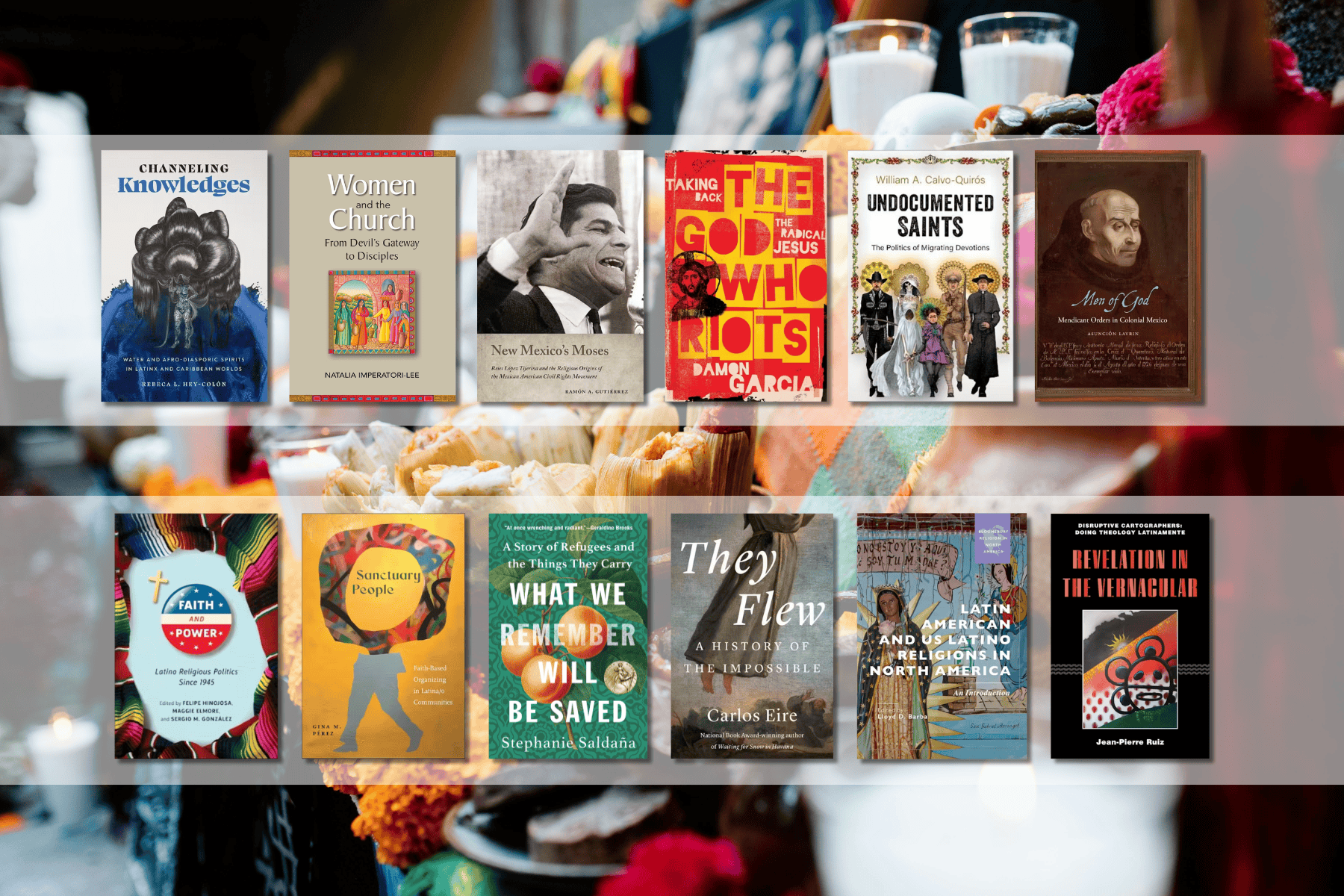
As we celebrate Hispanic Heritage Month, explore these books by authors of Hispanic and/or Latino/a descent, selected by the editors of Reading Religion.
If you’re interested in reviewing books for Reading Religion, take a look at the guidelines. If there are any books missing from the Reading Religion site that you think should be there, email readingreligion@aarweb.org.
Reviews to Read
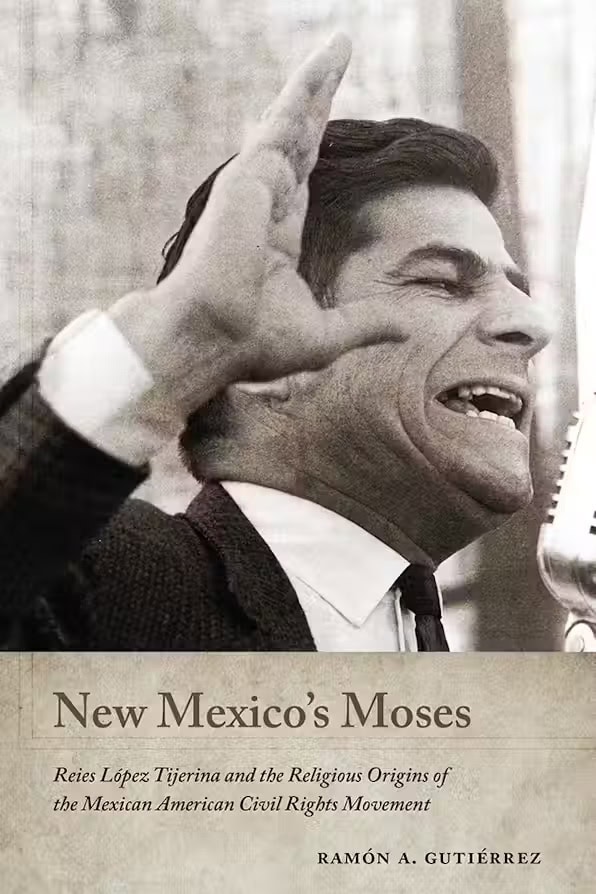
New Mexico's Moses: Reies López Tijerina and the Religious Origins of the Mexican American Civil Rights Movement
By Dana Lloyd
From the review:
“Gutiérrez’s study of Reies López Tijerina, makes a significant contribution to scholarship on the intersection of religiosity and Latinx activism. . . . This book not only offers new biographical insights into Tijerina, especially regarding his early life before his rise to prominence in the 1960s, but also reorients attention toward his religious formation, which persisted even during his more ‘secular” activist years.’” - Daniel Arroyo
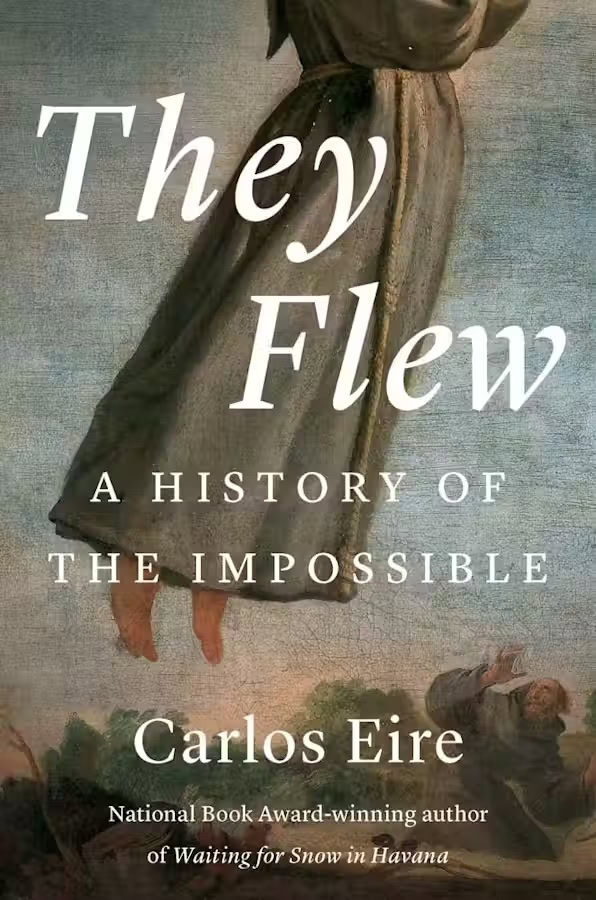
They Flew: A History of the Impossible
By Carlos M. N. Eire
From the review:
“The result [of this book] is a set of meticulous reconstructions of the careers of high-flying Catholic monastics in ecstatic states of pious adoration and of defiant witches soaring through the air to their infamous sabbats. Eire’s aim, and he succeeds admirably, is to illuminate the cultural conditions and shared religious beliefs that made levitation a credible feature of early modern Europe.” – David Weddle
Available for Review
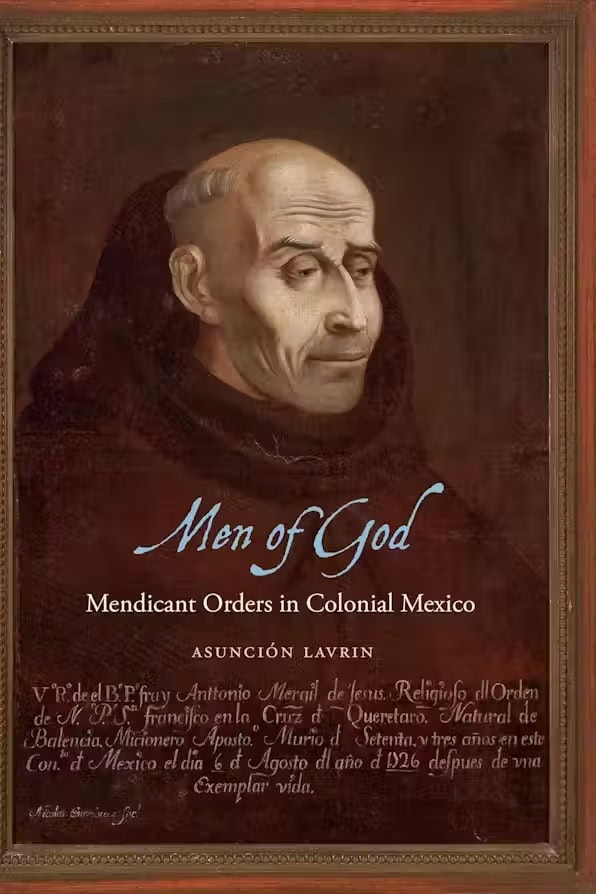
Men of God: Mendicant Orders in Colonial Mexico
By Asunción Lavrin
From the publisher:
“A broadly researched cultural history, Men of God offers a path to understanding the concept of religious masculinity through an intimate approach to the study of friars and lay brothers in colonial Mexico. Though other scholars have focused on the missionary work of the Augustinian, Franciscan, and Dominican friars, few have addressed their everyday lives and how the internal discipline of their orders shaped them. In Men of God Asunción Lavrin offers a sweeping yet intimate history of the mendicant friars in New Spain from the late sixteenth through the eighteenth centuries.
Focusing on these individuals’ lives from childhood through death, Lavrin explores contemporaneous ideas, from how to raise a boy to the friars’ training as novices, and the similarities and differences in the life experiences of lay brothers and ordained members. She discusses their sexuality to reveal the challenges and failures of religious manhood, as well as the drive behind their missionary duties, especially in the late seventeenth through the eighteenth centuries. Men of God also explores the concepts and realities of martyrdom and death, significant elements in the spirituality of the mendicant friars of colonial Mexico.”
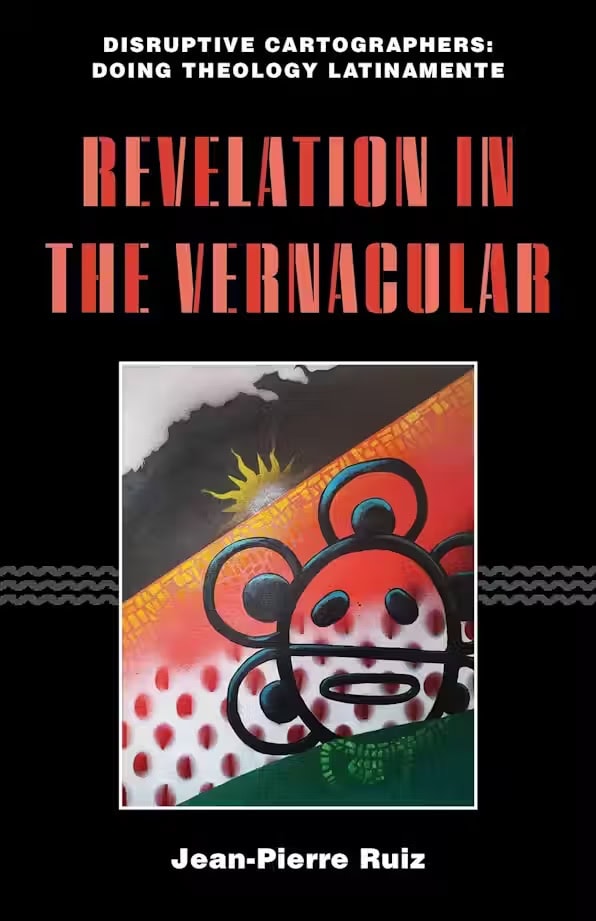
Revelation in the Vernacular
By Jean-Pierre Ruiz
From the publisher:
“Revelation in the Vernacular retrieves a hermeneutics of the vernacular that is rooted en lo cotidiano, in everyday life and experience. Traversing time and geography, Ruiz remaps a theology of revelation done latinamente, beginning with sixteenth-century encounters of Spanish colonizers with Indigenous peoples in the Caribbean. Drawing on the theology of the Incarnation articulated by Fray Luis de León (1527–91), he offers rich resources for interreligious engagement by believers in today’s religiously diverse world. Through an analysis of the documents of the 2019 Amazonian Synod, including Querida Amazonia, the Postsynodal Exhortation by Pope Francis, he explores a culture of encounter and dialogue that has been a hallmark of this pontificate. From the inscriptions in the caves of la Isla de Mona through the writings of the Latin American Bishops (CELAM), this book establishes a solid basis on which to discern the “Seeds of the Word” in our times.”
Faith and Power: Latino Religious Politics Since 1945
Edited by Felipe Hinojosa, Maggie Elmore, and Sergio M. González
From the publisher:
“Too often, religious politics are considered peripheral to social movements, not central to them. Faith and Power: Latino Religious Politics Since 1945 seeks to correct this misinterpretation, focusing on the post–World War II era. It shows that the religious politics of this period were central to secular community-building and resistance efforts.
The volume traces the interplay between Latino religions and a variety of pivotal movements, from the farm worker movement to the sanctuary movement, offering breadth and nuance to this history. This illuminates how broader currents involving immigration, refugee policies, de-industrialization, the rise of the religious left and right, and the Chicana/o, immigrant, and Puerto Rican civil rights movements helped to give rise to political engagement among Latino religious actors. By addressing both the influence of these larger trends on religious movements and how the religious movements in turn helped to shape larger political currents, the volume offers a compelling look at the twentieth-century struggle for justice.”
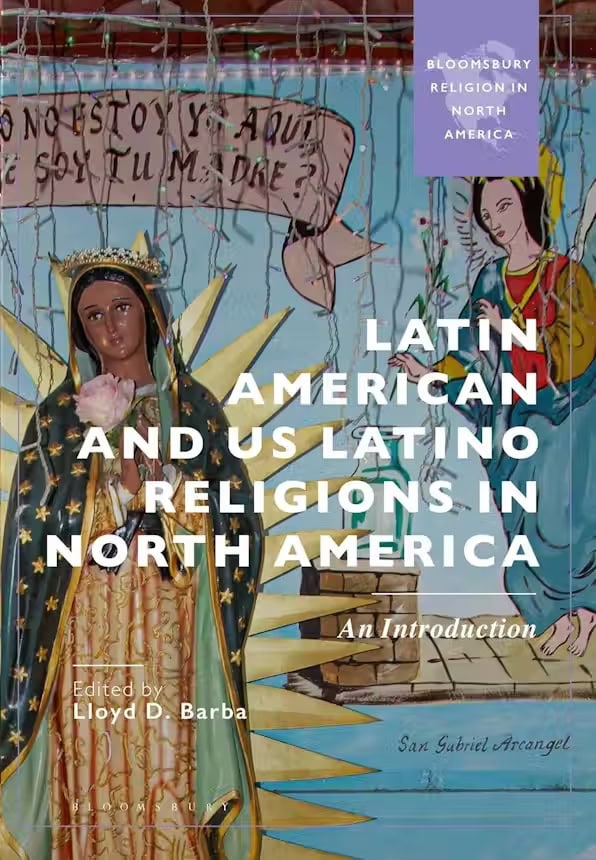
Latin American and US Latino Religions in North America: An Introduction
Edited by Lloyd D. Barba
From the publisher:
“How does the study of religion in Latin American and Latino contexts of North America push against boundaries of nation, language, class, race, and culture?
As an introduction to the field, this book gives an overview of the origins, traditions, cultures, and key developments in the study of Latin American and Latino religions in North America. Topics covered include the Bible and Latinxs, Latinx Catholicism in the United States, Muslims and Jews in the Latinx Americas, Catholicism in Mexico, Brazilian Migrational Christianity in North America, and more.
Case studies include Oaxacan religious transnationalism, La Santa Muerte, Latinx Religious “Nones”, and Latinx conversions. With over 85 images throughout, each chapter contains suggested further readings and a glossary of key terms and concepts.”
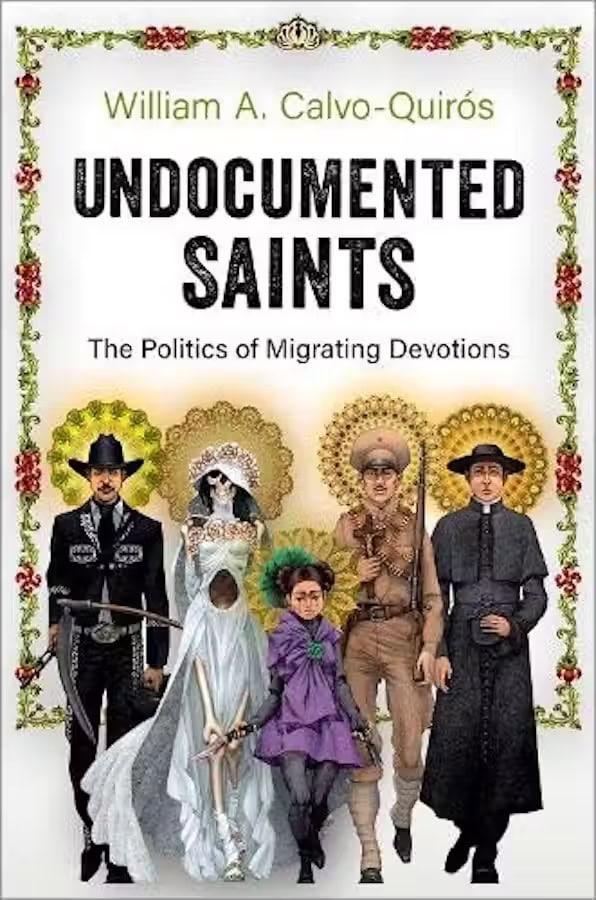
Undocumented Saints: The Politics of Migrating Devotions
By William A. Calvo-Quiros
From the publisher:
“Undocumented Saints follows the migration of popular saints from Mexico into the US and the evolution of their meaning. The book explores how Latinx battles for survival are performed in the worlds of faith, religiosity, and the imaginary, and how the socio-political realities of exploitation and racial segregation frame their popular religious expressions. It also tracks the emergence of inter-religious states, transnational ethnic and cultural enclaves unified by faith.
The book looks at five vernacular saints that have emerged in Mexico and whose devotions have migrated into the US in the last one hundred years: Jesús Malverde, a popular bandido turned saint caudillo; Santa Olguita, an emerging feminist saint linked to border women's experiences of sexual violence; Juan Soldado, a murder-rapist soldier who is now a patron for undocumented immigrants and the main suspect in the death of an eight-year-old victim known now as Santa Olguita; Toribio Romo, a Catholic priest whose ghost/spirit has been helping people cross the border into the US since the 1990s; and La Santa Muerte, a controversial personification of death who is particularly popular among LGBTQ migrants. Each chapter contextualizes a particular popular saint within broader discourses about the construction of masculinity and the state, the long history of violence against Latina and migrant women, female erasure from history, discrimination against non-normative sexualities, and as US and Mexican investment in the control of religiosity within the discourses of immigration.”
Sanctuary People: Faith-Based Organizing in Latina/o Communities
By Gina M. Pérez
From the publisher:
“The New Sanctuary Movement is a network of faith-based organizations committed to offering safe haven to those in danger, often in churches, often outside the law, and often at risk to themselves. The practice of sanctuary, with its capacity to provide safety, shelter, and protection to society's most vulnerable, gained significant prominence after the 2016 presidential election and the ushering in of particularly harsh anti-immigration policies.
Since 2017, Ohio has had some of the highest numbers of public sanctuary cases in the nation. Sanctuary People explores these sanctuary practices in Ohio and locates them in broader local and national efforts to provide refuge and care in the face of the challenges facing Latina/o communities in a moment of increased surveillance, migrant detention, displacement, and economic and social marginalization. Pérez argues for a conceptualization of sanctuary that is capacious, placing support of Puerto Ricans displaced in the wake of Hurricane Maria within the broader practices of sanctuary and expanding our understandings of the movement that addresses the precarious conditions of Latinas/os beyond migration status.”
The God Who Riots: Taking Back the Radical Jesus
By Damon Garcia
From the publisher:
“For thousands of years, religious messages have been used to either uphold the status quo or upend it. And while we are all very familiar with the kind of conservative Christianity that suppresses liberation and justifies oppression, progressive Christians are just as guilty of upholding unjust systems when we prioritize harmony and unity over justice. True justice requires us to choose sides. True justice requires action. When we look at Scripture, we see that the God of the Bible was never neutral. Again and again God chooses the side of the oppressed. Jesus said the Spirit of the Lord anointed him "to let the oppressed go free," and those of us who claim to follow Jesus today must commit to this radical mission of liberation.
In The God Who Riots, popular YouTuber and public theologianDamon Garcia uses his frank, tell-it-like-it-is style to connect us with the Jesus who flipped tables in the temple and led an empire-destabilizing movement for liberation. The spirit of this God is embodied in today's protests, riots, and strikes. As we join this struggle for liberation, we are joining the God who riots alongside us, within us, and through us.”
What We Remember Will Be Saved: A Story of Refugees and the Things They Carry
By Stephanie Saldaña
From the publisher:
“. . . In an era of mass migration in which more than 100 million people are displaced comes this lyrical portrait of Syrian and Iraqi refugees and the belongings they carry. What We Remember Will Be Saved is a book of hope, home, and the stories we hold within us when everything else has been lost.
Journalist and scholar Stephanie Saldaña, who lived in Syria before the war, sets out on a journey across nine countries to meet refugees and learn what they salvaged from the ruins when they escaped. Now, in the narratives of six extraordinary women and men, from Mt. Sinjar to Aleppo to Lesvos to Amsterdam, we discover that the little things matter a great deal. Saldaña introduces us to a woman who saved her city in a dress, a musician who saved his stories in songs, and a couple who rebuilt their destroyed pharmacy even as the city around them fell apart. Together they provide a window into a religiously diverse corner of the Middle East on the edge of unraveling, and the people keeping it alive with their stories.”
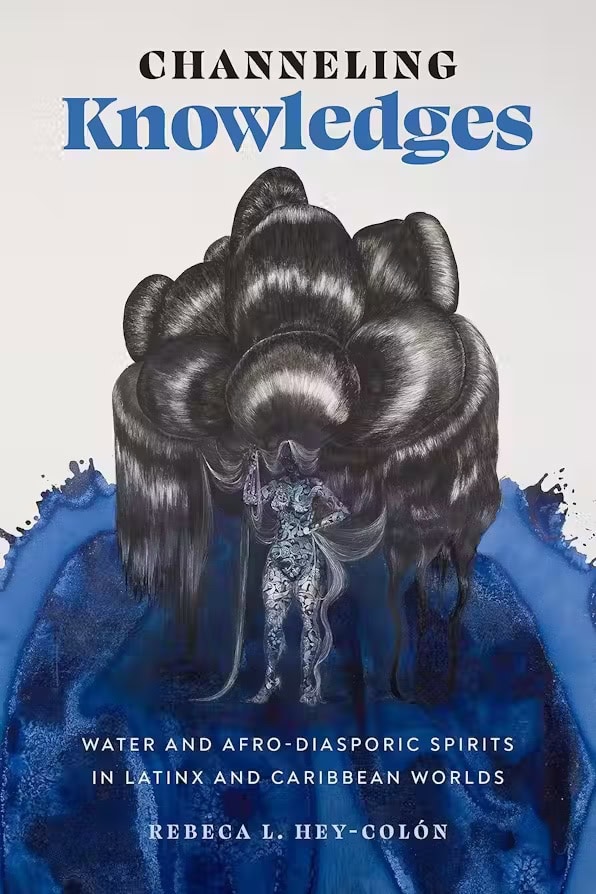
Channeling Knowledges: Water and Afro-Diasporic Spirits in Latinx and Caribbean Worlds
By Rebeca L. Hey-Colón
From the publisher:
“Water is often tasked with upholding division through the imposition of geopolitical borders. We see this in the construction of the Rio Grande/Río Bravo on the US-Mexico border, as well as in how the Caribbean Sea and the Pacific Ocean are used to delineate the limits of US territory. In stark contrast to this divisive view, Afro-diasporic religions conceive of water as a place of connection; it is where spiritual entities and ancestors reside, and where knowledge awaits.
Departing from the premise that water encourages confluence through the sustainment of contradiction, Channeling Knowledges fathoms water's depth and breadth in the work of Latinx and Caribbean creators such as Mayra Santos-Febres, Rita Indiana, Gloria Evangelina Anzaldúa, and the Border of Lights collective. Combining methodologies from literary studies, anthropology, history, and religious studies, Rebeca L. Hey-Colón's interdisciplinary study traces how Latinx and Caribbean cultural production draws on systems of Afro-diasporic worship—Haitian Vodou, La 21 División (Dominican Vodou), and Santería/Regla de Ocha—to channel the power of water, both salty and sweet, in sustaining connections between past, present, and not-yet-imagined futures.”
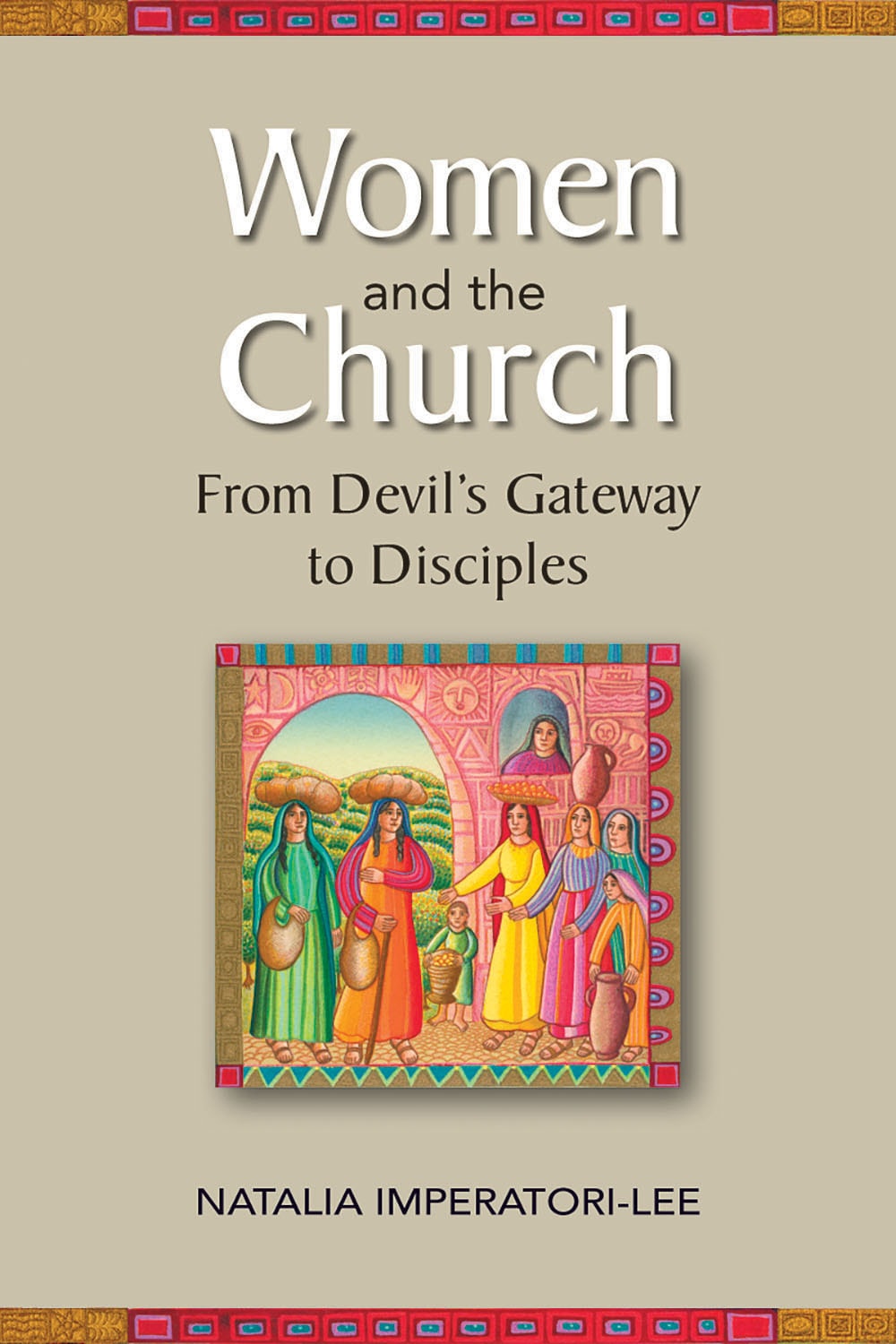
Women and the Church: From Devil's Gateway to Discipleship
By Natalia Imperatori-Lee
From the publisher:
“Women and the Church examines the history of Christian feminism as a response to patriarchy, the ways in which women have been portrayed in scripture and women's hermeneutical strategies, and the seminal contributions of women to the subfields of systematic theology. Unlike many books in this genre, which are collections of essays by diverse authors, Women and the Church is written from one author's perspective as an attempt to systematize the historic presence and absence of women in Roman Catholicism.”