Disability Pride Month Reading List
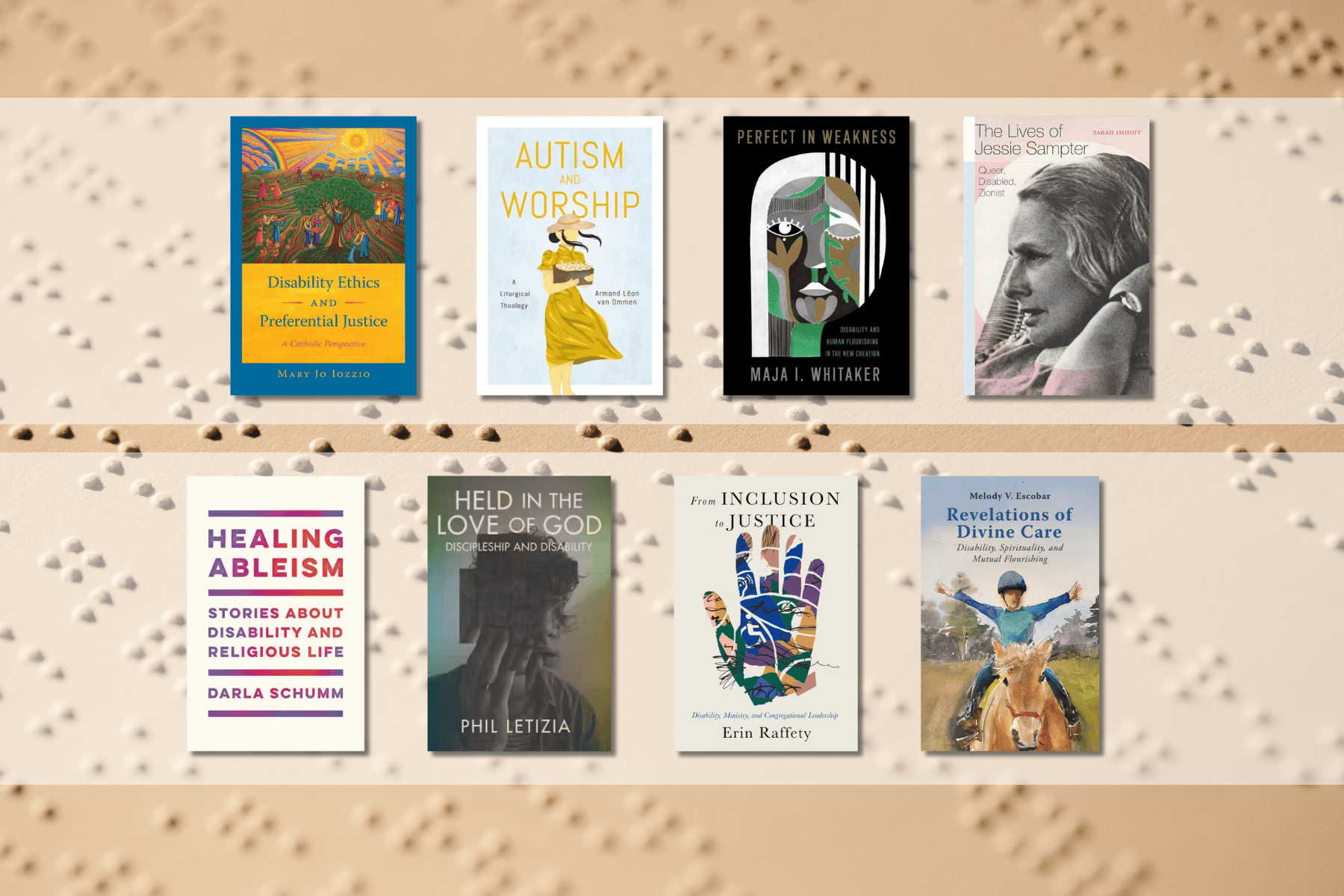
Some Suggested Titles from AAR's Reading Religion
Reading Religion is an openly accessible book review website published by the American Academy of Religion. The site provides up-to-date coverage of scholarly publishing in religious studies, reviewed by scholars with special interest and/or expertise in the relevant subfields. Reviews aim to be concise, comprehensive, and timely.
Below, the editors of Reading Religion have selected some books and reviews from the site and have shared some titles available to review. If you’re interested in reviewing books for Reading Religion, take a look at the guidelines. If there are any books missing from the Reading Religion site that you think should be there, email readingreligion@aarweb.org.
Reviews to Read
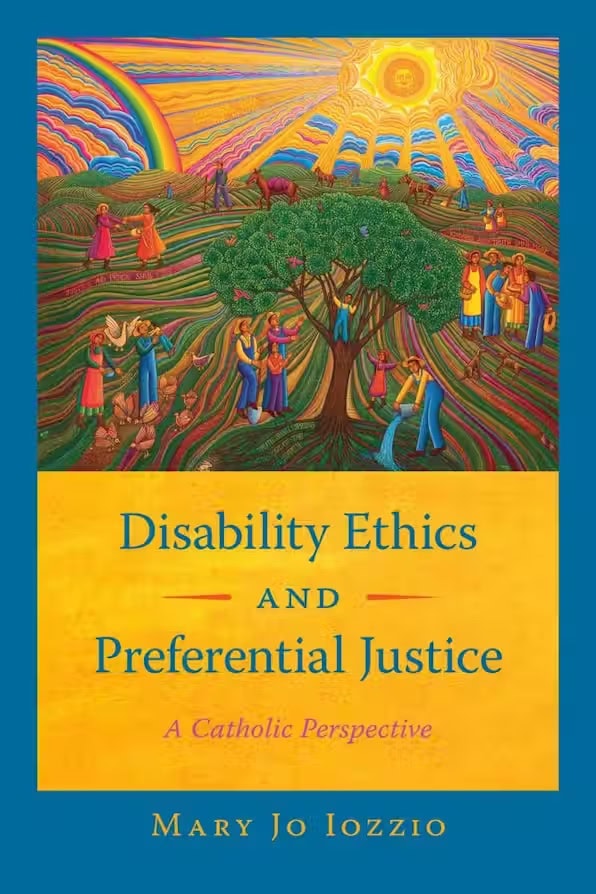
Disability Ethics and Preferential Justice: A Catholic Perspective
By Mary Jo Iozzio
From the review:
“Iozzio’s volume is a clarion call for our world where people with disabilities need to be treated with more respect, care, and justice. . . . There is no doubt that Iozzio’s research is solid and her passion for disability justice shines throughout the pages.” – Keunwoo Kwon
Autism and Worship: A Liturgical Theology
By Armand Léon van Ommen
From the review:
“Van Ommen offers a critical examination of ‘the normal’ as a paradigm within Christian worship and draws Gabriel Marcel’s philosophy of presence and ‘availability’ to explore how humanity-as-mutual-relationality can be practiced in the context of neurodiversity—without putting the burden entirely on either neurodivergent persons or on neurotypical persons. This is a refreshing counterpoint to theologies of disability that treat autistic people as tools sent by God to teach neurotypicals spiritual endurance.” - Joyanna Eisenberg

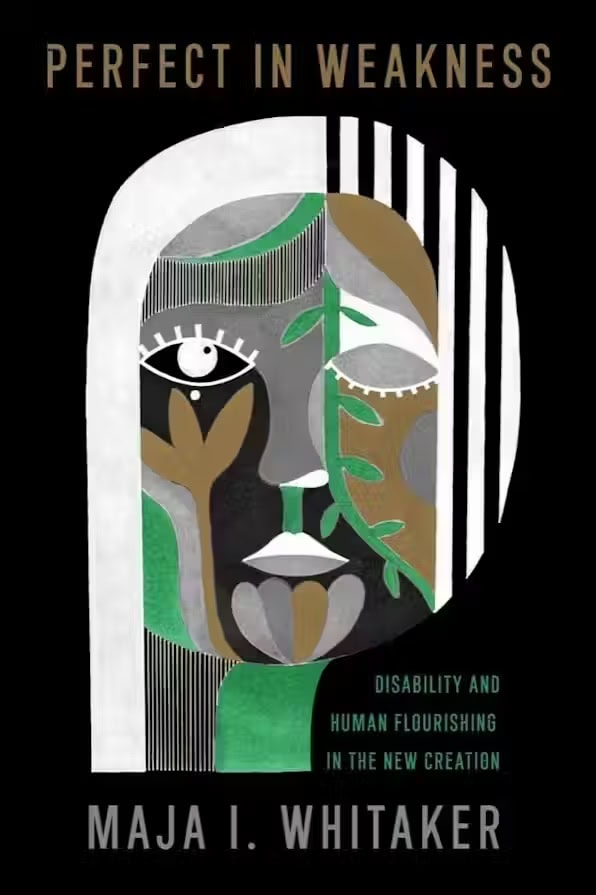
Perfect in Weakness: Disability and Human Flourishing in the New Creation
By Maja I. Whitaker
From the review:
“[Whitaker] argues that one can recognize oneself after a profound transformation. Still, science has shown that trauma, abuse, and shame can cause us to misrecognize ourselves and perhaps misrecognize our identity before God.” – Aaron Klink
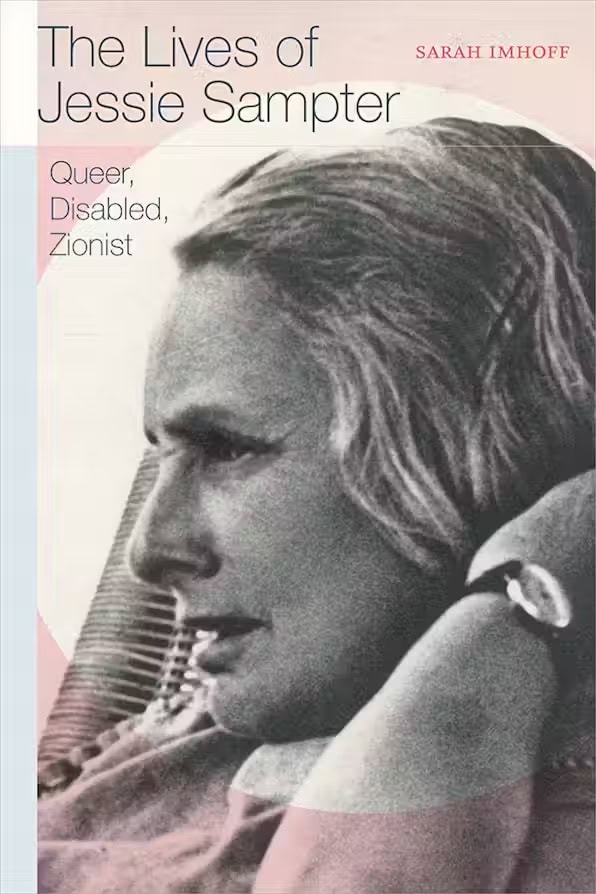
The Lives of Jessie Sampter: Queer, Disabled, Zionist
By Sarah Imhoff
From the review:
“Blurring the boundaries of biography and microhistory . . . Imhoff reviews the complex life of Jessie Sampter, a woman born in New York in 1883 and disabled by polio in 1895; a writer, thinker, and poet who challenged the boundaries of religious identity . . .” – Brittany Acors
Available for Review
Healing Ableism: Stories About Disability and Religious Life
By Darla Schumm
From the publisher:
“Most people encounter disability at some point in their lives, either in their own bodies or through a friend or loved one. Faith leaders, sacred texts, and members of religious communities frequently offer religious teachings and metaphors as explanation for the presence of disability, but rarely do we hear the voices of people living with disabilities reflecting on their experiences of God, faith, or religious life. In Healing Ableism: Stories about Disability and Religious Life, Darla Schumm explores the extraordinary stories of people with disabilities who struggle with the ordinary human challenges of faith and doubt, exclusion and inclusion, and injustice and justice. Blending candid storytelling, cultural critique, and theory, Schumm invites readers to reflect on the experiences of people with disabilities in religious communities and organizations. Schumm argues that it’s not disability that needs healing, it’s ableism that needs healing. In the final chapter, Schumm offers accessible love as one avenue for healing ableism.”
Held in the Love of God: Discipleship and Disability
By Phil Letizia
From the publisher:
“Throughout its history, evangelicalism has neglected to consider the spiritual lives of people with profound intellectual disabilities and how their experiences might contribute to a fuller understanding of what it means to follow Jesus. Both the historic and modern constructions of evangelical discipleship have led to particular ministry strategies and practices that rarely consider the presence of people with profound intellectual disabilities.
In Held in the Love of God, Phil Letizia attends to this oversight in the discipleship of the evangelical church by investigating the historical development of evangelicalism and its particular characteristics that, as he argues, make it difficult for the intellectually disabled to be perceived as followers of Jesus. Letizia draws upon a rich cross section of research, stories and firsthand accounts from families of disability, and works from evangelicalism and disability theologians to raise questions requiring reflection on the part of evangelicals. The methods used strive to uncover stories of disability and discipleship while also examining the most common context for evangelical discipleship, the local church.”
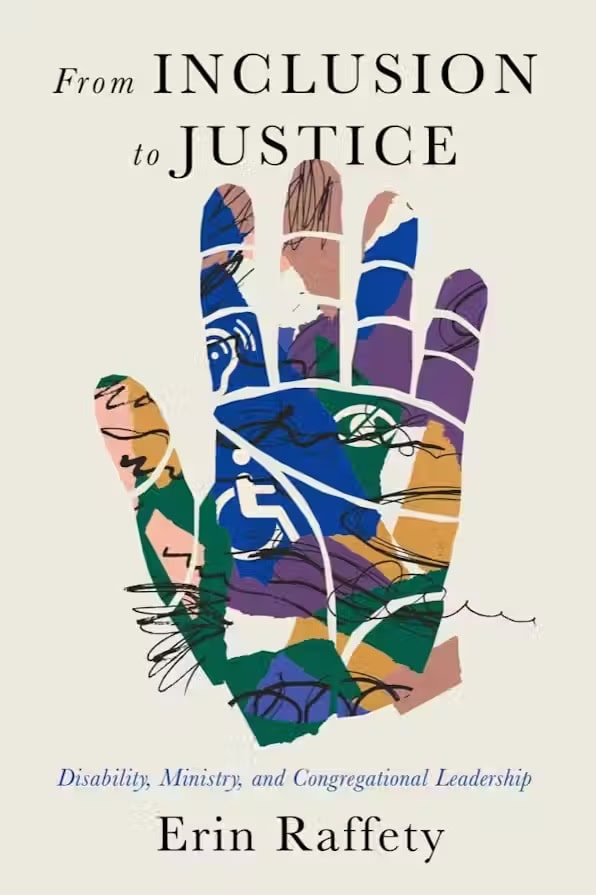
From Inclusion to Justice: Disability, Ministry, and Congregational Leadership
By Erin Raffety
From the publisher:
“American Christianity tends to view disabled persons as problems to be solved rather than people with experiences and gifts that enrich the church. Churches have generated policies, programs, and curricula geared toward "including" disabled people while still maintaining "able-bodied" theologies, ministries, care, and leadership. Ableism—not lack of ramps, of finances, or of accessible worship—is the biggest obstacle for disabled ministry in America. In From Inclusion to Justice, Erin Raffety argues that what our churches need is not more programs for disabled people but rather the pastoral tools to repent of able-bodied theologies and practices, listen to people with disabilities, lament ableism and injustice, and be transformed by God's ministry through disabled leadership. Without a paradigm shift from ministries of inclusion to ministries of justice, our practical theology falls short.
Drawing on ethnographic research with congregations and families, pastoral experience with disabled people, teaching in theological education, and parenting a disabled child, Raffety, an able-bodied Christian writing to able-bodied churches, confesses her struggle to repent from ableism in hopes of convincing others to do the same. At the same time, Raffety draws on her interactions with disabled Christian leaders to testify to what God is still doing in the pews and the pulpit, uplifting and amplifying the ministry and leadership of people with disabilities as a vision toward justice in the kingdom of God.”
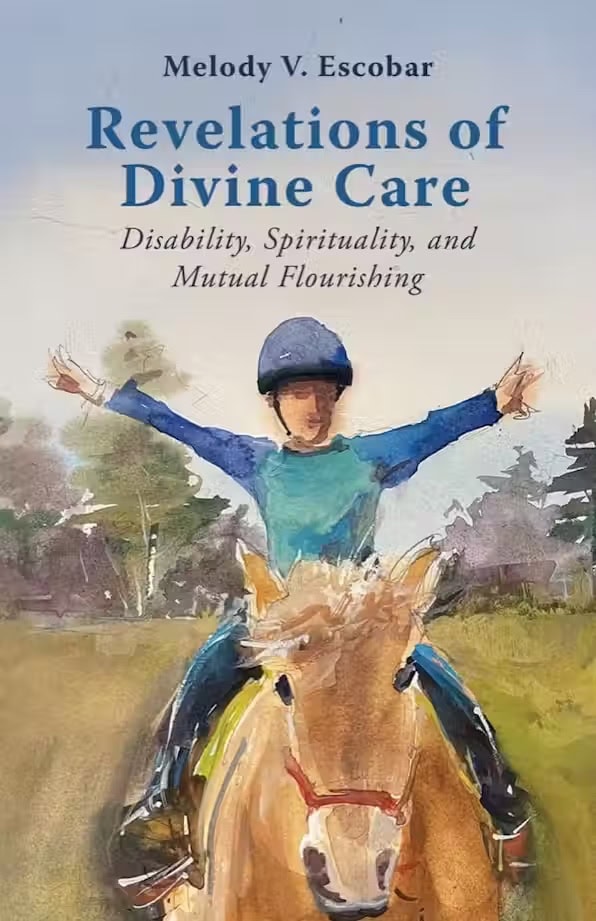
Revelations of Divine Care: Disability, Spirituality, and Mutual Flourishing
By Melody V. Escobar
From the publisher:
“In Revelations of Divine Care, Escobar explores Julian of Norwich’s vision of unconditional love and the innovative ways in which all people--with or without a disability--can challenge dynamics of power and control to nurture communities in which love compels others to love.
Escobar presents a fresh reading of Julian's revolutionary teachings and connects the fourteenth-century mystic with first-person narratives of mothers who are caregivers. She calls us to re-vision our understanding of kenosis and advocate for the mutual flourishing of every being, following the pattern of generative trinitarian relationship where each is in and for the other. Escobar invites us to bring our own stories into conversation with members of our communities, providing theological language for what it means to live a spirituality of solidarity guided by faith, one in which "active mercy," committed works of charity, is considered a universal practice instead of the experience of a select few.
Relevant for ministers, theologians, activists, and caregivers alike, Revelations of Divine Care presents a model for community in which compassionate care becomes "life giving and making." Escobar offers new, practical applications for being "church," such as placing persons with disabilities and their families at the "speaking center," countering ableist programming with creative liturgical practices, and prioritizing respite care for the blossoming life of the whole community. She draws from the wells of wisdom of the Christian mystical tradition to illuminate the interdependence of all life--which we ignore at our own peril--reminding us of the urgency and beauty of unconditional love and care, whether in the riding arena, the church, or the public sphere.”