
Celebrating the AAR Members Appointed to the American Academy of Arts and Sciences
On April 22, 2026, the American Academy of Arts & Sciences announced 252 new members from all around academia, the arts, industry, journalism, and more.
"The Academy, chartered in 1780, was established to recognize accomplished individuals and engage them in addressing the greatest challenges facing the young republic. The first members elected to the Academy include George Washington, who said – in his first annual message to Congress in 1790 – 'Knowledge is in every country the surest basis of public happiness.'"
This year's elected members include authors Barbara Kingsolver and Colson Whitehead; actors Jodie Foster and Rita Moreno; various scientists, mathematicians, inventors, and doctors; and several AAR members.
Please join us in congratulating the following AAR members.
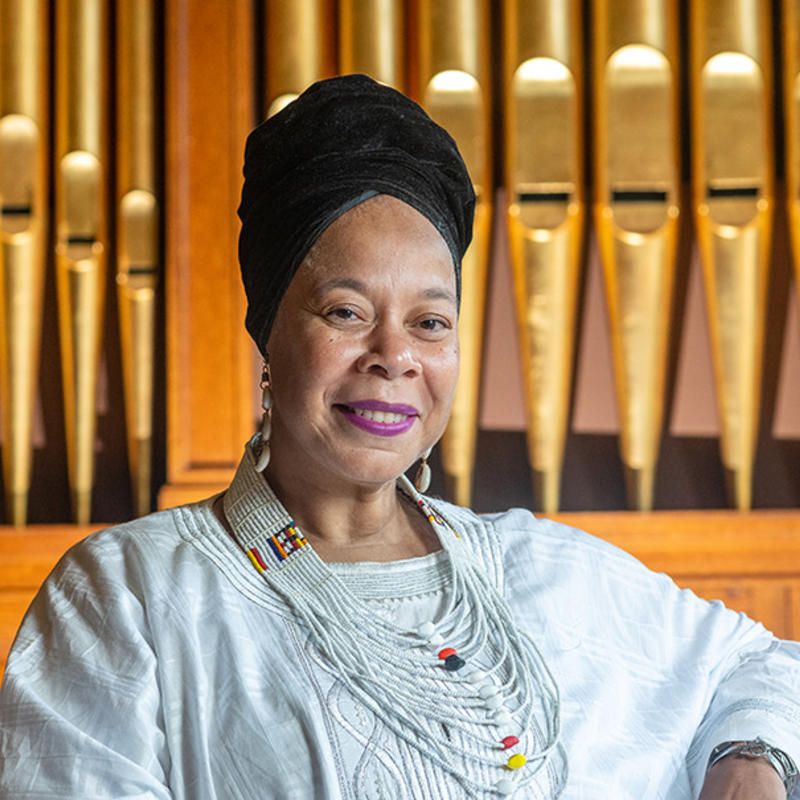
Tracey Hucks
Tracey Hucks, the Victor S. Thomas Professor of Africana Religious Studies and Suzanne Young Murray Professor (Radcliffe Institute for Advanced Study) at Harvard Divinity School, is a nationally known and esteemed scholar of Africana Studies and American Religious History. Prior to Harvard Divinity School, she served as Provost and Dean of the Faculty at Colgate University where she was James A. Storing Professor of Religion and Africana and Latin American Studies.
Hucks is the author of Yoruba Traditions and African American Religious Nationalism, which was published in 2012 and was a finalist for the American Academy of Religion First Book Award and the Journal of Africana Religions Albert J. Raboteau Book Prize. Hucks's most recent publication is Obeah, Orisa and Religious Identity in Trinidad: Volume One: Africans in the White Colonial Imagination, which was published in October 2022 by Duke University Press.
In addition to her numerous awards, fellowships, and distinctions, she was also an elected member of the Program Committee of the American Academy of Religion, elected member of the Executive Committee of the Society for the Study of Black Religion, and is currently a member of the Corporation of Haverford College.
"I do not take lightly that I am entering the American Academy of Arts and Sciences on the 250th anniversary of the nation and as the Academy prepares for its 250th anniversary in 2030. In these uncertain times, I look forward to being in service to the AAAS as we advance our shared values of excellence, integrity, the preservation of independence, and the cultivation of moral and courageous leadership. I wholeheartedly embrace the Academy's mission to 'advance the interest, honor, dignity, and happiness of a free, independent, and virtuous people.'"

Robert P. Jones
Robert P. Jones is the president and founder of Public Religion Research Institute (PRRI) and New York Times bestselling author. His newest book is Backslide: Reclaiming a Faith and a Nation after the Christian Turn Against Democracy (09/08/2026). He is also the author of The Hidden Roots of White Supremacy and the Path to a Shared American Future; White Too Long: The Legacy of White Supremacy in American Christianity, which won a 2021 American Book Award; and The End of White Christian America, which won the prestigious 2019 Grawemeyer Award in Religion.
Jones has written on politics, culture, and religion for The Atlantic, TIME, Religion News Service, and other outlets. He is frequently featured in major national media, such as CNN, MSNBC, NPR, The New York Times, The Washington Post, and others. Jones writes the popular Redeeming Democracy newsletter, featuring research and analysis on religion, racial justice, and the moral work of democracy.
He holds a Ph.D. in religion from Emory University, an M.Div. from Southwestern Baptist Theological Seminary, and a B.S. in computing science and mathematics from Mississippi College. Jones was selected by Emory University’s Graduate Division of Religion as Distinguished Alumnus of the Year in 2013, and by Mississippi College’s Mathematics Department as Alumnus of the Year in 2016. Jones serves on the national program committee for the American Academy of Religion and is a past member of the editorial boards for the Journal of the American Academy of Religion and Politics and Religion, a journal of the American Political Science Association.
"As a religion scholar whose career has mostly taken shape outside the structures of the formal university system, I did not imagine such a recognition would be in my future. But I am grateful to be inducted into such a broad interdisciplinary organization during this challenging time in our history. This year, as we are celebrating our nation’s 250th anniversary, we are simultaneously experiencing unprecedented attacks on fundamental democratic principles and higher education, and we will need the best of all the academic disciplines to meet this moment."

Reiko Ohnuma
Reiko Ohnuma is the Robert 1932 and Barbara Black Professor of Religion at Dartmouth College, where she specializes in the Buddhist traditions of South Asia (with a particular focus on narrative literature, hagiography, and the role and imagery of women), but also teaches courses on Hinduism.
She is the author of three books, including, most recently, Unfortunate Destiny: Animals in the Indian Buddhist Imagination, published in 2017, which shows how premodern Buddhist literature uses nonhuman creatures to understand the nature of humanity. Her 2012 book, Ties That Bind: Maternal Imagery and Discourse in Indian Buddhism, looks at Buddhist literary depictions of motherhood and their relationship to the lived experience of mothers in premodern India. Head, Eyes, Flesh, Blood: Giving Away the Body in Indian Buddhist Literature, published in 2007, looks at the cultural impact of narratives of the Buddha’s self-sacrifice.
She holds a B.A. from the University of California (Berkeley) and an M.A. and Ph.D. from the University of Michigan (Ann Arbor). She is the author of Head, Eyes, Flesh, and Blood: Giving Away the Body in Indian Buddhist Literature (Columbia University Press, 2007); Ties That Bind: Maternal Imagery and Discourse in Indian Buddhism (Oxford University Press, 2012); and Unfortunate Destiny: Animals in the Indian Buddhist Imagination (Oxford University Press, 2017).
"I am thrilled, honored, and frankly a bit shocked, to be elected to the Academy. I’ve already attended my first event — a meeting of the northern New England branch, featuring a wonderful conversation between AAR past President Laurie Patton (now President of the Academy) and the environmentalist and author Bill McKibben. I look forward to many future opportunities to represent the field of religious studies, and to learn from so many smart and accomplished people in other fields."
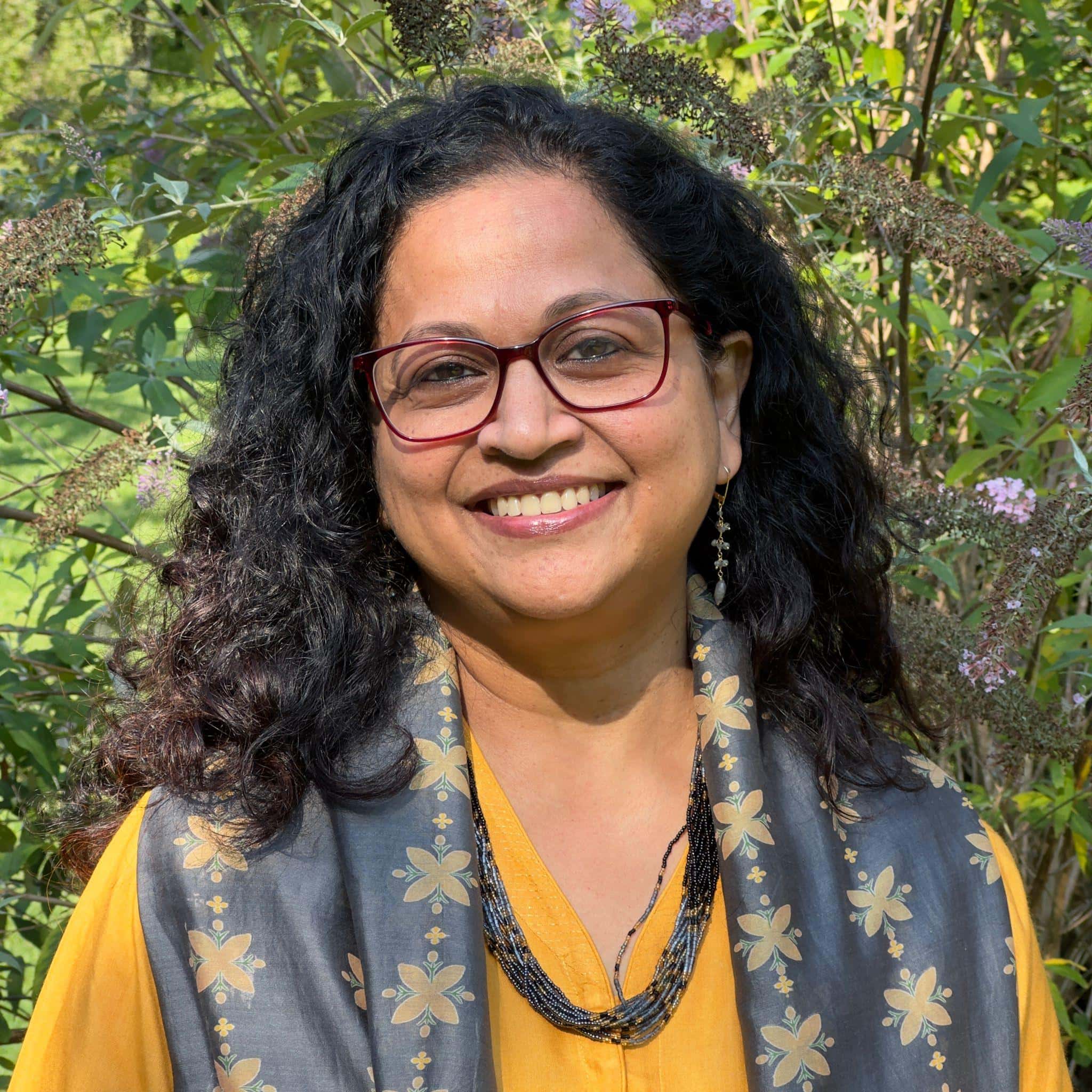
Leela Prasad
Leela Prasad served as the AAR’s President from November 2024 to November 2025. She joined Brown’s Department of Religious Studies in 2024 after 25 years at Duke University and is now the St. Purandar Das Distinguished Professor of Religious Studies.
Her first book, Poetics of Conduct: Oral Narrative and Moral Being in a South Indian Town (Columbia, 2007) won the American Academy of Religion’s prize for the “Best First Book in History of Religions.” She has several publications on gender and performance, including the co-edited Gender and Story in South India, which highlights the power and poignancy of a female-oriented poetics.
Apart from university teaching, Leela teaches graduate seminars on Gandhi in US prisons. She is also documenting the life-stories of Gandhi-inspired individuals in India who read Gandhi while serving prison terms. With her collaborator, Baba Prasad, she is co-directing a film called Let Us See on the lifelong resonance Gandhi on a schoolteacher who met him in 1944 when India was on the brink of freedom from colonial rule.
"It is a profound honor, needless to say, to be part of the American Academy of Arts and Sciences, a community of scholars, artists, and practitioners committed to rigorous inquiry across disciplines. But I also see it as a tremendous opportunity, and responsibility, to work alongside others who courageously stand up for inclusive values, especially in anti-democratic times. This has also been at the heart of the AAR. I'm proud to carry it forward in new company."
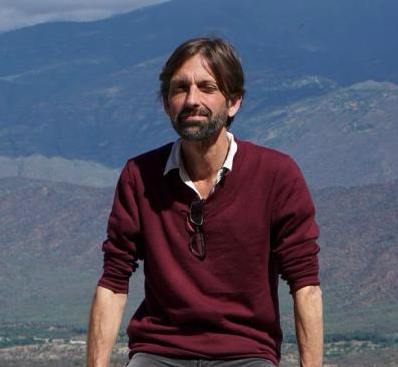
Hugh Urban
Hugh Urban, College of Arts & Sciences Department Chair, and Distinguished Professor of Comparative Studies at The Ohio State University, is interested in the study of secrecy in religion, particularly in relation to questions of knowledge and power. His work focuses primarily on religions of South Asia and new religious movements in the United States. He is the author of numerous books, including: Tantra: Sex, Secrecy, Politics and Power in the Study of Religion (2003), The Power of Tantra (2010), The Church of Scientology: A History of a New Religion (2011), and Secrecy: Silence, Power and Religion (2021). He is also an avid amateur mycologist and member of the Ohio Mushroom Society.
Urban received his B.A. in Religion, Philosophy and Art from George Washington University and his M.A. in Religious Studies and Ph.D. in History of Religions from the University of Chicago.
"I am surprised, flattered, and deeply honored to be elected to the American Academy of Arts and Sciences. I am pleased to know that our work in the academic study of religion is being recognized, and I look forward to meeting, collaborating, and sharing ideas with those in many other fields. To me, this is the most exciting part of all academic work — interacting and exchanging ideas with those in many other disciplines beyond our own (and I hope to meet Jodie Foster, who is also being inducted this year!)"