Black History Month Reading List
Some Suggested Titles from AAR's Reading Religion
Reading Religion is an openly accessible book review website published by the American Academy of Religion. The site provides up-to-date coverage of scholarly publishing in religious studies, reviewed by scholars with special interest and/or expertise in the relevant subfields. Reviews aim to be concise, comprehensive, and timely.
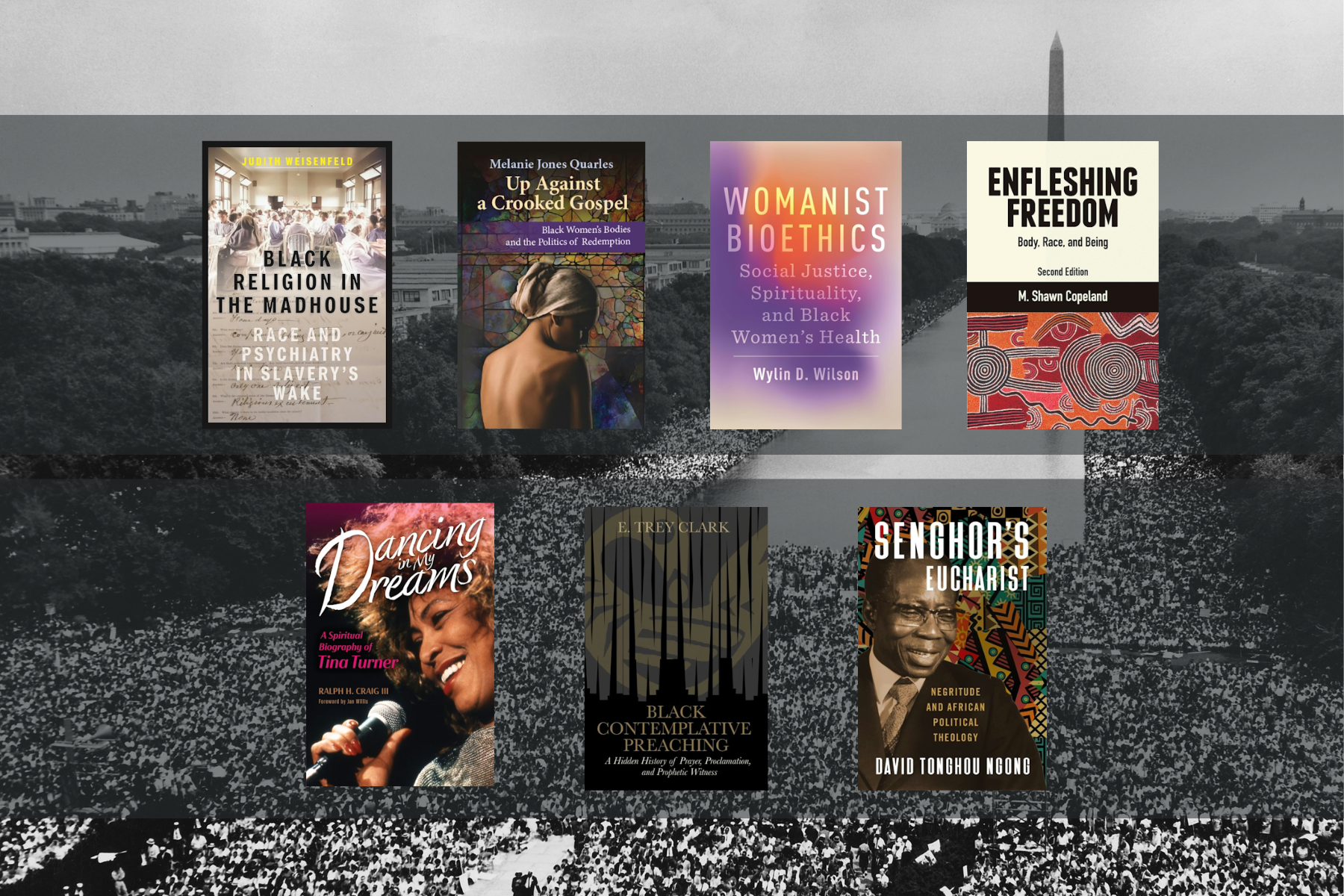
Below, the editors of Reading Religion have selected reviews from the site that engage with Black history.
Reviews to Read
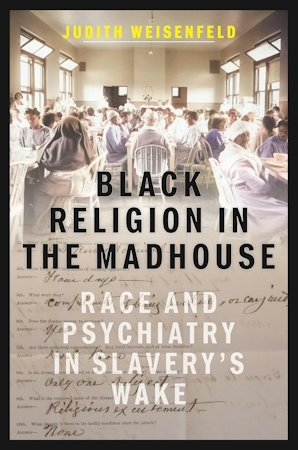
Black Religion in the Madhouse: Race and Psychiatry in Slavery's Wake
By Judith Weisenfeld
From the review:
“Weisenfeld demonstrates that Black religion was a form of free expression for those previously enslaved, but employed by white psychiatrists to systematically re-enslave them, not on cotton and sugar plantations, but within the laundry rooms and work gangs of mental health institutions.” - Davyda Hammond
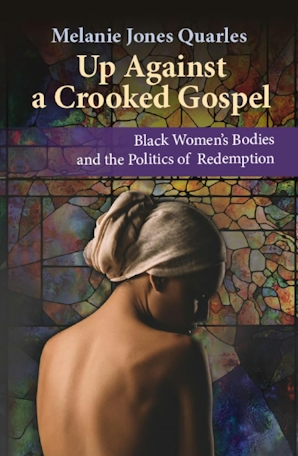
Up Against a Crooked Gospel: Black Women's Bodies and the Politics of Redemption
By Melanie Jones Quarles.
From the review:
“[This book] exists not merely as an exegetical or ethical intervention—it serves as an embodied summons to straighten what has been bent by crooked systems, to honor the ancestral knowledge borne in Black women’s bodies, and to refuse any gospel that cannot stand upright in the face of suffering and structural harm. In this, Jones Quarles not only achieves her aims but offers a groundbreaking contribution to womanist theology and ethics that will resonate for years to come.” - Desiree McCray
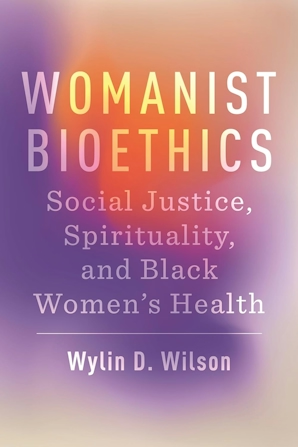
Womanist Bioethics: Social Justice, Spirituality, and Black Women's Health
By Wylin D. Wilson
From the review:
“Womanism, [Wilson] explains, pushes bioethical conceptions of justice beyond mere resource allocation and autonomy, and beyond questions of informed consent. Womanism presses mainstream bioethics to embrace difference, understanding that vulnerability and autonomy might mean something different for an incarcerated mother when it comes to childbirth than for an able-bodied, middle-class accountant.” - Kathryn Freeman
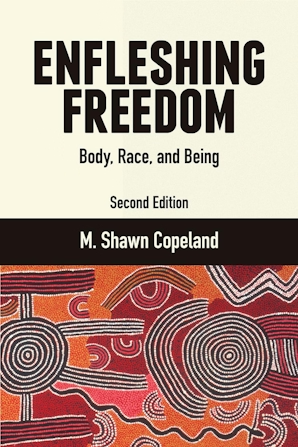
Enfleshing Freedom: Body, Race, and Being, Second Edition
By M. Shawn Copeland
From the review:
“By centering what is necessary and ordinary for exploited, despised, poor women of color—especially community and interdependence, which Copeland often emphasizes—any person and community can, in faithful solidarity with the Triune God, connect not only with the tangible presence of the divine but also with other human beings.” – Kimbol Soques
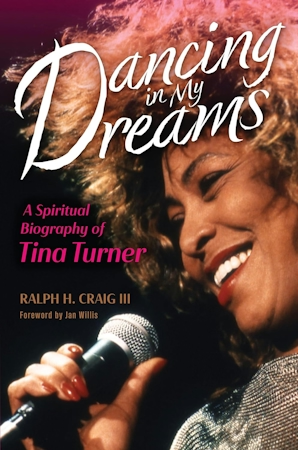
Dancing in My Dreams: A Spiritual Biography of Tina Turner
By Ralph H. Craig
From the review:
“Craig understands [Turner] as a Buddhist teacher whose concerts constituted a spiritual experience for millions, energizing many with a power they had never felt before. In this way, he argues, her concerts gave her a musical platform to exercise religious authority, enabling her to work toward world peace and global transformation.” - Karma Lekshe Tsomo
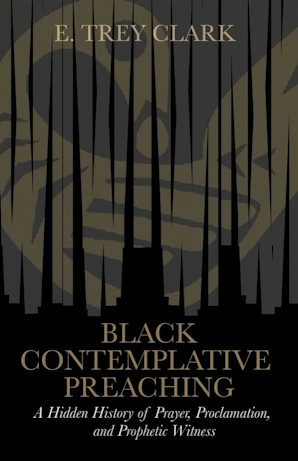
Black Contemplative Preaching: A Hidden History of Prayer, Proclamation, and Prophetic Witness
By E. Trey Clark
From the review:
“As Clark makes clear, [this book] challenges us not only to consider the Black contemplative tradition but to resist the limiting assumption that there is a single mode of Black preaching. There remains much to study, learn, and expand upon in this field. While this is a deeply theoretical text, its wisdom and insights are accessible to ministers, proclaimers, spiritual leaders, and other faith-oriented practitioners across traditions and identities.” - Chelsea Brooke Yarborough
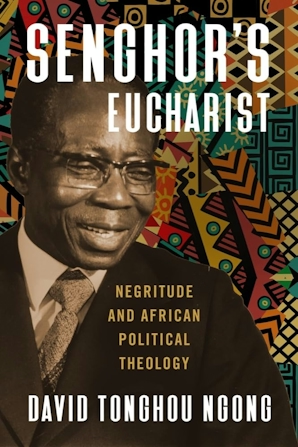
Senghor's Eucharist: Negritude and African Political Theology
By David Tonghou Ngong
From the review:
“[This book] provides a fresh and original look at the anticolonial movement of Negritude by exploring its theological underpinnings through Senghor’s poetry. It is also a major contribution to political theology from an African context, which addresses a void present within African theology—namely, its lack of conscientious engagement with African poetry and its theo-political implications.” - Emmanuel Katongole