
A Note from the RSN Editor
Religion scholars are currently facing numerous challenges, including issues of academic freedom and censorship, diminished budgets, department mergers and closures, job loss, and a general and powerful threat to the humanities, to name just a few. Despite the seemingly constant barrage, scholars continue to resist and defend the discipline, the department, and the critical education of undergraduate and graduate students in institutions of higher education. As a partner space to the AAR’s Religious Studies Matters and our Advocacy Newsletter, we are opening up op-ed space on Religious Studies News for “letters to the editor”- where members write about issues they are passionate about and calls to action when they might want to request assistance, particularly when it comes to department closures and the threat of job loss. Our first of this kind of letter, from the religious studies faculty at the University of Oregon, is printed below. The letter, originally addressed directly to the AAR Board of Directors, prompted a quick and salient response from the AAR Board.
As an AAR member, you have a network of support. If you need help, let us know.
In solidarity,
Amy Defibaugh, RSN Editor
Director, Programs and Publications, AAR
August 19, 2025
Dear Members of the American Academy of Religion Board of Directors, fellow AAR members, and RSN readers:
We are writing to notify you of a looming threat to religious studies, the humanities, and tenure protections at the University of Oregon (UO). We are members of UO’s Department of Religious Studies, which is home to seven associate and full professors. Our department has served a critical role within humanities education here at UO since 1939, and in recent years has been thriving, with new faculty hires, robust course enrollments, and a steady stream of research grants, awards, and publications.
We have just learned that UO leadership plans to eliminate our department and terminate most or all of our department’s faculty. In addition, they plan to eliminate and terminate tenured faculty in at least three other humanities departments. News about these pending terminations have just begun to surface.
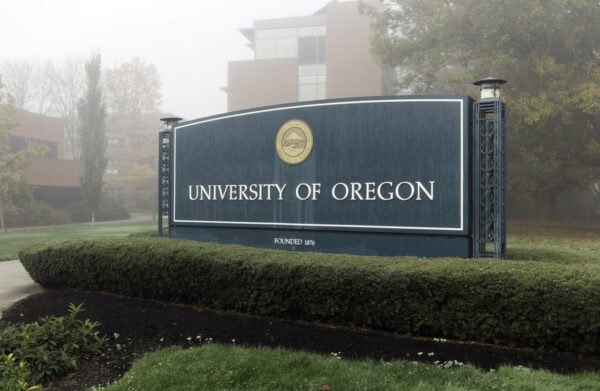
Credit: iStock/ wellesenterprises.
The campus of the University of Oregon in Eugene, Oregon. The University of Oregon is a large public research university.
UO leaders have officially announced that deans and vice presidents will present their recommendations to the president and provost by Labor Day and job status letters will be sent out the week of September 7th. They have not officially announced the specifics of their plans.
UO leadership claims this is necessary due to a budget crisis. We insist it is a crisis of management. Last year, the university welcomed more than 80 new faculty members at all ranks. One of those new faculty members was hired into the Department of Religious Studies. Several others were hired into other departments that are now being threatened. Meanwhile, despite the claims of crisis, the university right now is advertising searches for numerous faculty positions, including tenure-track jobs in Data Science, Computer Science, Biology, and Bioengineering.
To reiterate, these layoffs are targeting faculty who have proved to be outstanding teachers, prolific researchers, and prominent leaders in their fields. Collectively, faculty in our department have published over 25 books and well over 100 articles. In the past few years, our faculty have received three major research grants from the National Endowment for the Humanities as well as numerous other grants and fellowships (e.g. Kawasaki Fellow in Japanese History, UNESCO Senior Research Fellow, Senior Research Fellow at the University of Regensburg); they have served as editor for the Journal of Early Christian Studies and on editorial boards for various other journals and book series; they have served as leaders of academic organizations (e.g. President of the Society for Buddhist-Christian Studies, President of the North American Society for the Study of Christian Apocryphal Literature), directed UO’s Judaic Studies, Arabic Studies, and Asian Studies programs, and published an Arabic-language textbook, among many other accomplishments.
We hope to rally public support to persuade our university leadership to halt this action. With the AAR Board of Director’s statement of support, we also call on AAR members to send statements of support to UO President Karl Scholz (pres@uoregon.edu), Provost Christopher Long (provost@uoregon.edu), College of Arts and Sciences Dean Chris Poulsen (poulsenc@uoregon.edu), and UO’s Board of Trustees (trustees@uoregon.edu). Please also consider taking action by signing the United Academics of University of Oregon petition to “Fight Cuts, Defend Higher Education at the University of Oregon.”
Signed Religious Studies Faculty, University of Oregon:
Jeff Schroeder (jschroe9@uoregon.edu)
Luke Habberstad (lukehabb@uoregon.edu)
Lily Vuong (lvuong@uoregon.edu)
Deborah Green (dagreen@uoregon.edu)
David Hollenberg (dbh@uoregon.edu)
Stephen Shoemaker (sshoemak@uoregon.edu)
Mark Unno (munno@uoregon.edu)
News Source